JaxMore Creative Photography Marketing strategy and repositioning for a B2B photography studio
Client: JaxMore Creative Photography (formerly KTBB)
Project type: Marketing strategy, brand repositioning, campaign architecture
Role: Marketing consultant
Scope: Primary and secondary research, competitive analysis, segmentation, targeting, positioning, brand transition strategy, campaign architecture, channel mix, measurement framework
brief
KTBB is a B2B photography studio. The brief was to reposition the business for higher-paying clients and migrate the brand to a new name, JaxMore. Two moves at the same time. A rebrand and a market move upward, both designed to land without losing the existing client base.
The consultancy began with one strategic question.
How does professional product photography actually justify premium pricing in a B2B buyer's mind, and can it be proven?
STRATEGIC QUESTION
Most photography studios position on craft. The buyer is asked to trust that professional images are worth the price difference on the basis of taste alone. This is a fragile argument for B2B sales, where every line item has to defend itself against alternatives: cheaper freelancers, in-house teams, and increasingly, generative AI.
The strategy needed an empirical foundation. If professional product photography genuinely shifts buyer perception, brand trust, and willingness to pay, that finding becomes the strategic asset around which JaxMore's entire premium positioning can be built.
PRIMARY RESEARCH
METHODOLOGY
A within-subject phased survey was designed to test the effect of image quality on consumer perception across seven metrics: brand trust, attention to detail, price perception, perceived product quality, purchase likelihood, willingness to explore further, and willingness to purchase despite cheaper alternatives.
Phase 1 (50 responses) tested professional images. After a one-day reset to limit recency bias, Phase 2 (45 responses) tested amateur images of the same products. Final analysis was conducted on 33 participants who completed both phases. The within-subject design meant each respondent acted as their own control, isolating image quality as the variable being tested.
PRIMARY RESEARCH
headline finding
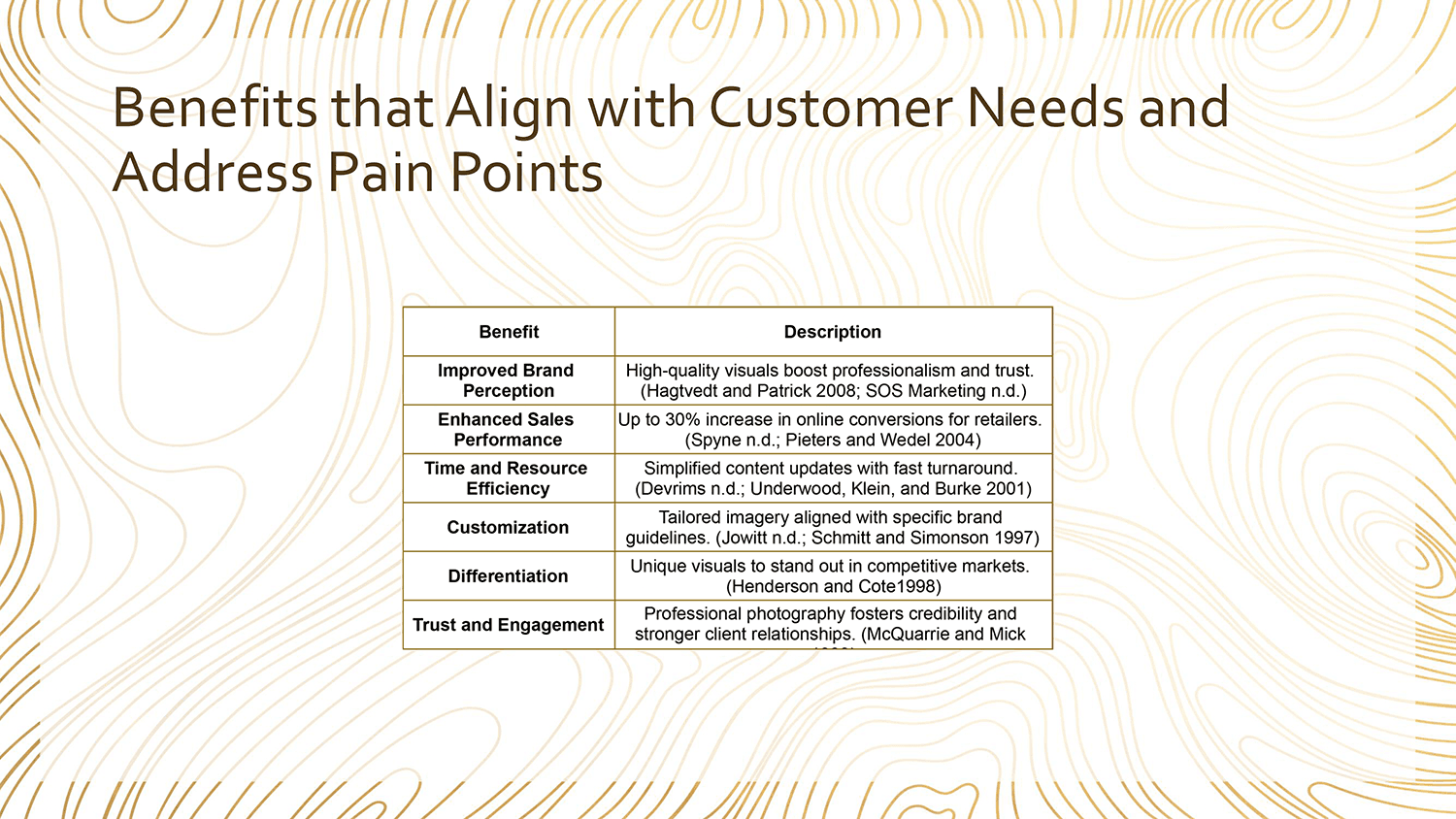
This single number became the strategic anchor for the entire repositioning. Professional product photography is not an aesthetic preference. It is a measurable shift in buyer perception that translates directly into pricing power.
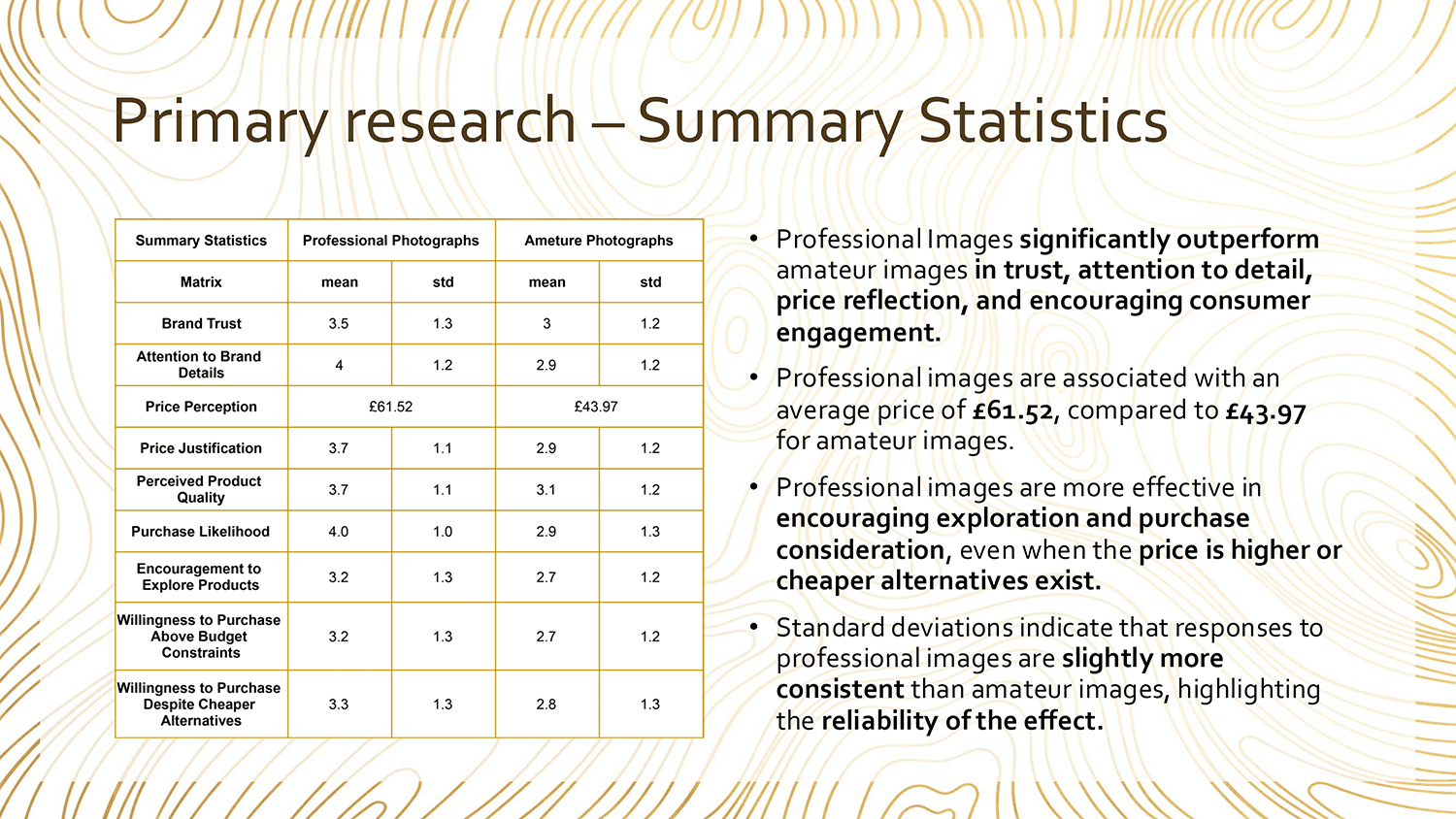
Professional images were associated with an average willingness-to-pay of £61.52. Amateur images of the same products were associated with £43.97. A 40% price-perception lift, attributable to image quality alone.
Standard deviations on the professional responses were tighter than the amateur responses, meaning the effect was not just larger. It was more reliable.
PRIMARY RESEARCH
seven-metric test
A paired statistical test confirmed that professional images significantly outperformed amateur images across every metric measured. Brand trust was borderline significant. The other six metrics cleared the significance threshold cleanly.
The implication: professional product photography influences B2B purchase consideration not just on aesthetic grounds but on the underlying buyer-perception drivers. Attention to detail, perceived quality, purchase likelihood, and willingness to explore the catalogue all shift upward in lockstep with image quality.
PRIMARY RESEARCH
correlation analysis
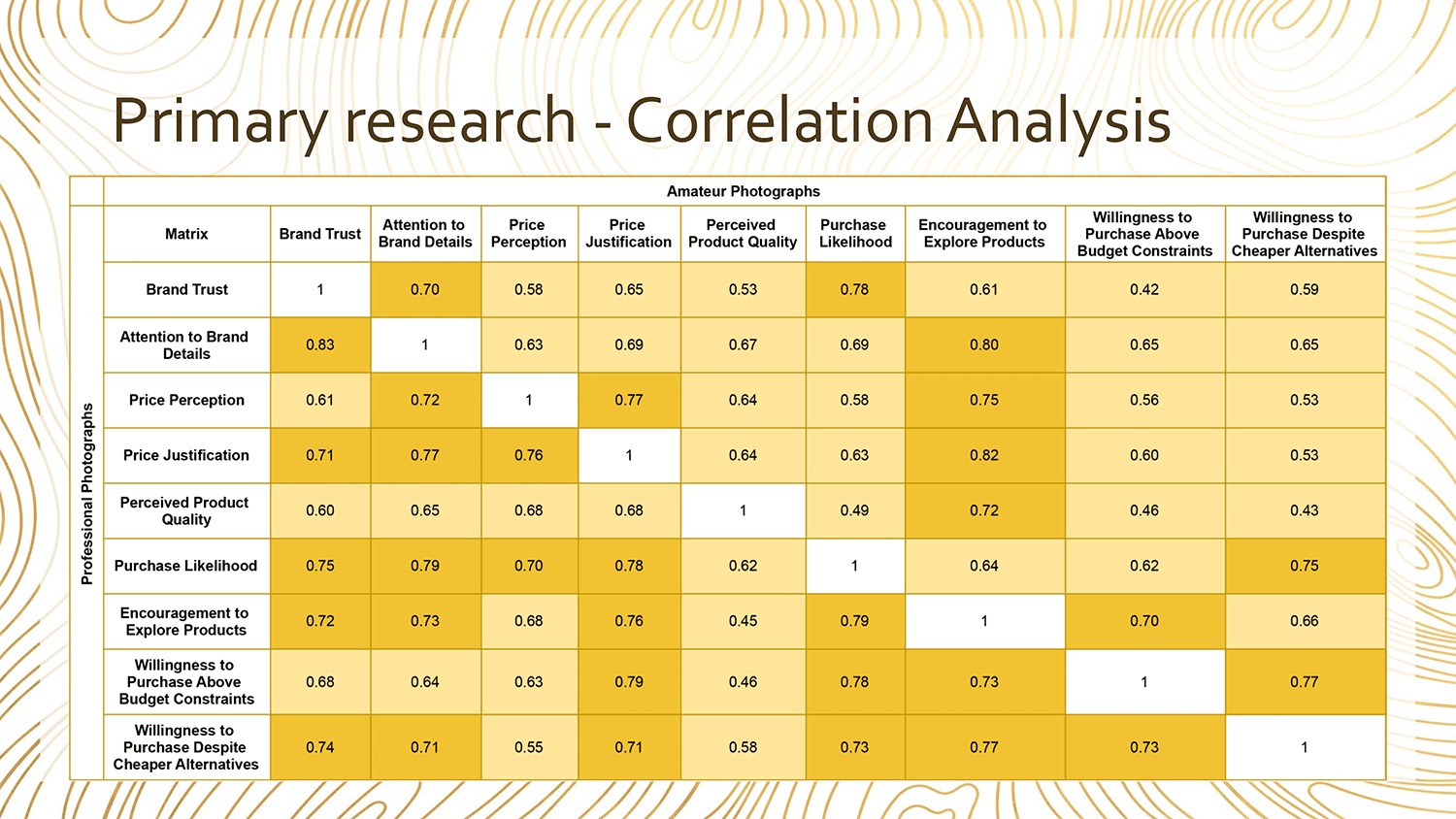
The correlation analysis asked a different question: not how much each metric shifted, but whether the relationships between metrics changed depending on image quality.
In the professional condition, Price Justification sat at the centre. It correlated strongly with Encouragement to Explore, Purchase Likelihood, and Attention to Brand Details. The variables moved together. In the amateur condition, the network fragmented. Price Justification lost its central position. Perceived Product Quality decoupled from purchase behaviour.
Professional photography does not just lift individual perceptions. It creates a reinforcing system. Remove it, and the system weakens at multiple points simultaneously.
Market context
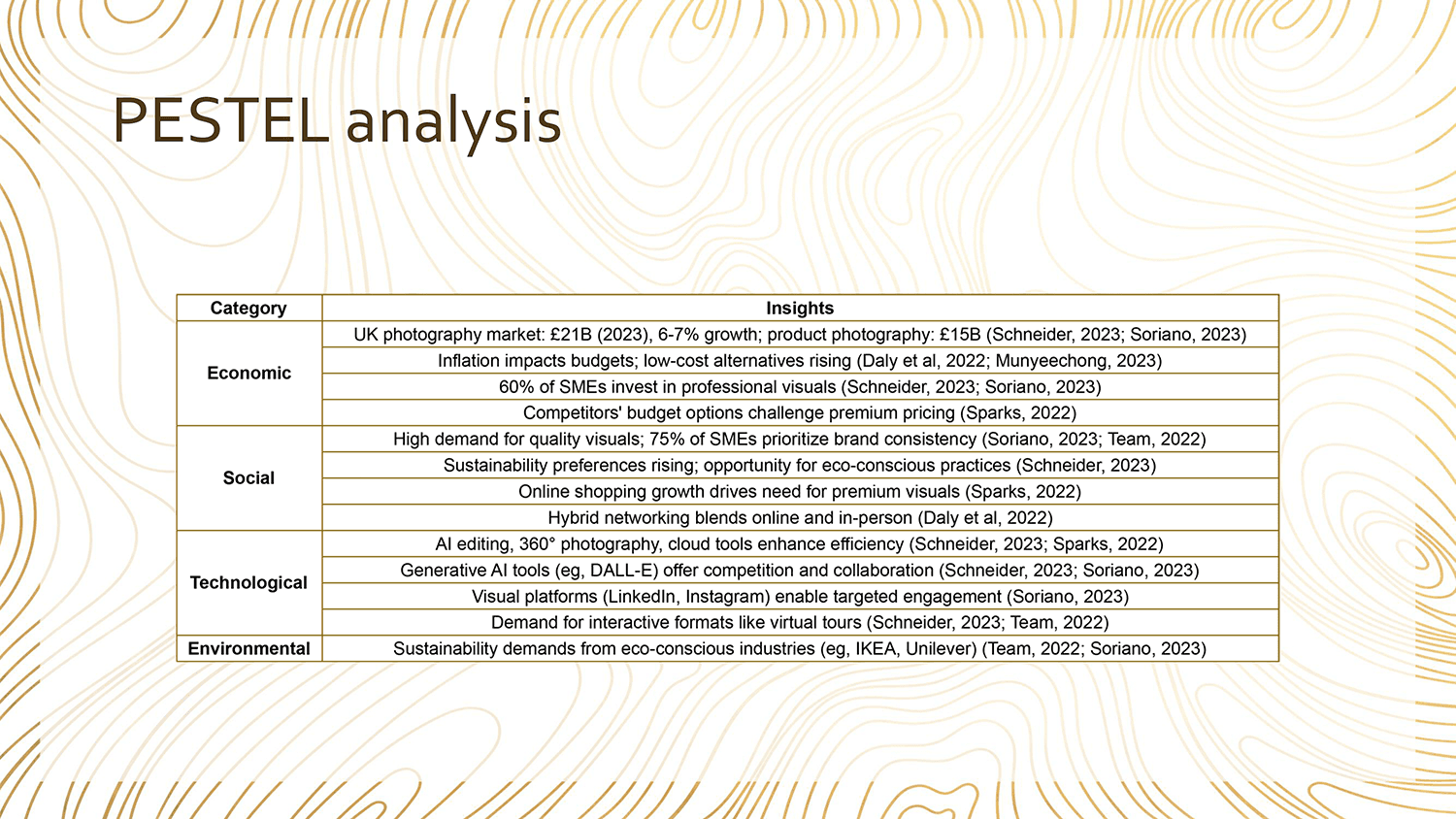
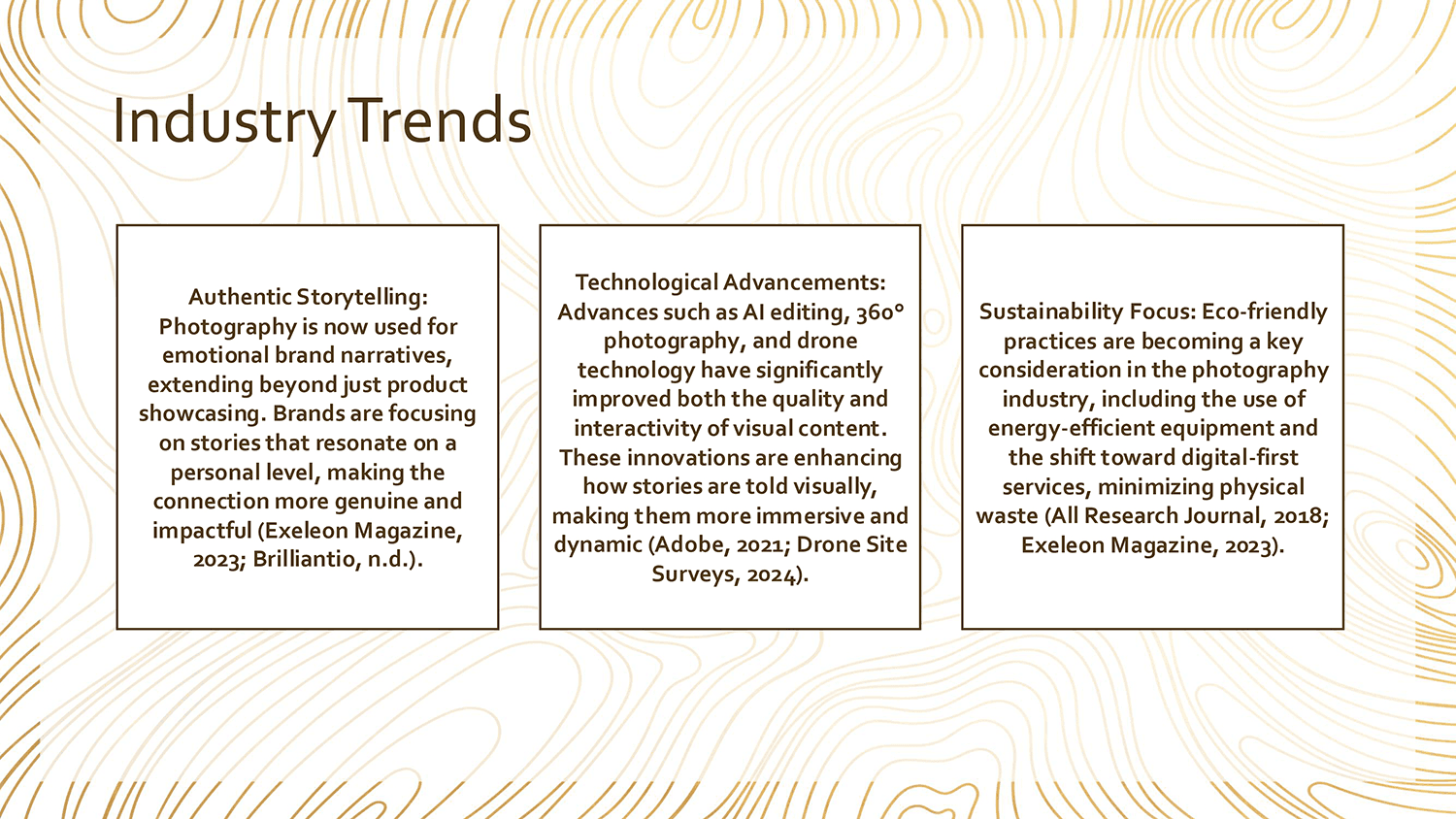
Secondary research framed the market environment. A PESTEL analysis surfaced three industry-shaping forces. Authentic brand storytelling now sits at the centre of how brands use photography. Technological advancements (AI editing, 360° imagery, drone capture) are raising both quality expectations and the technical bar for entry. Sustainability practice is becoming a buyer-side decision criterion rather than a marketing claim.
The strategic backdrop: JaxMore was repositioning into a market that already valued the things it could deliver, with rising competitive intensity.
Competitive landscape
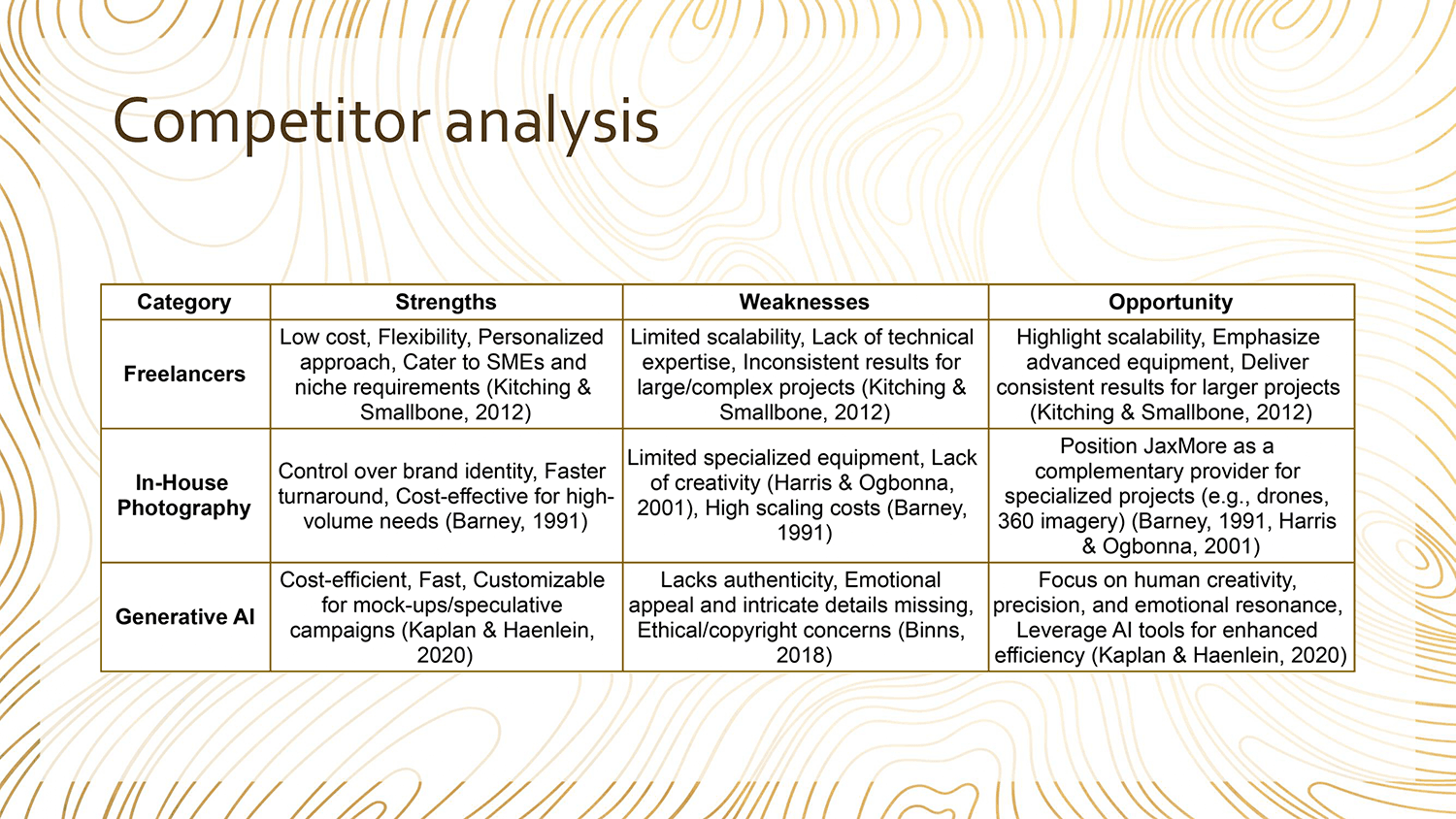
Porter's Five Forces identified the competitive pressures. Rivalry between traditional studios. Substitute threats from generative AI and stock imagery. Supplier power from brief-controlling clients. Buyer power in a price-sensitive SME market. The low barrier to entry for freelancers.
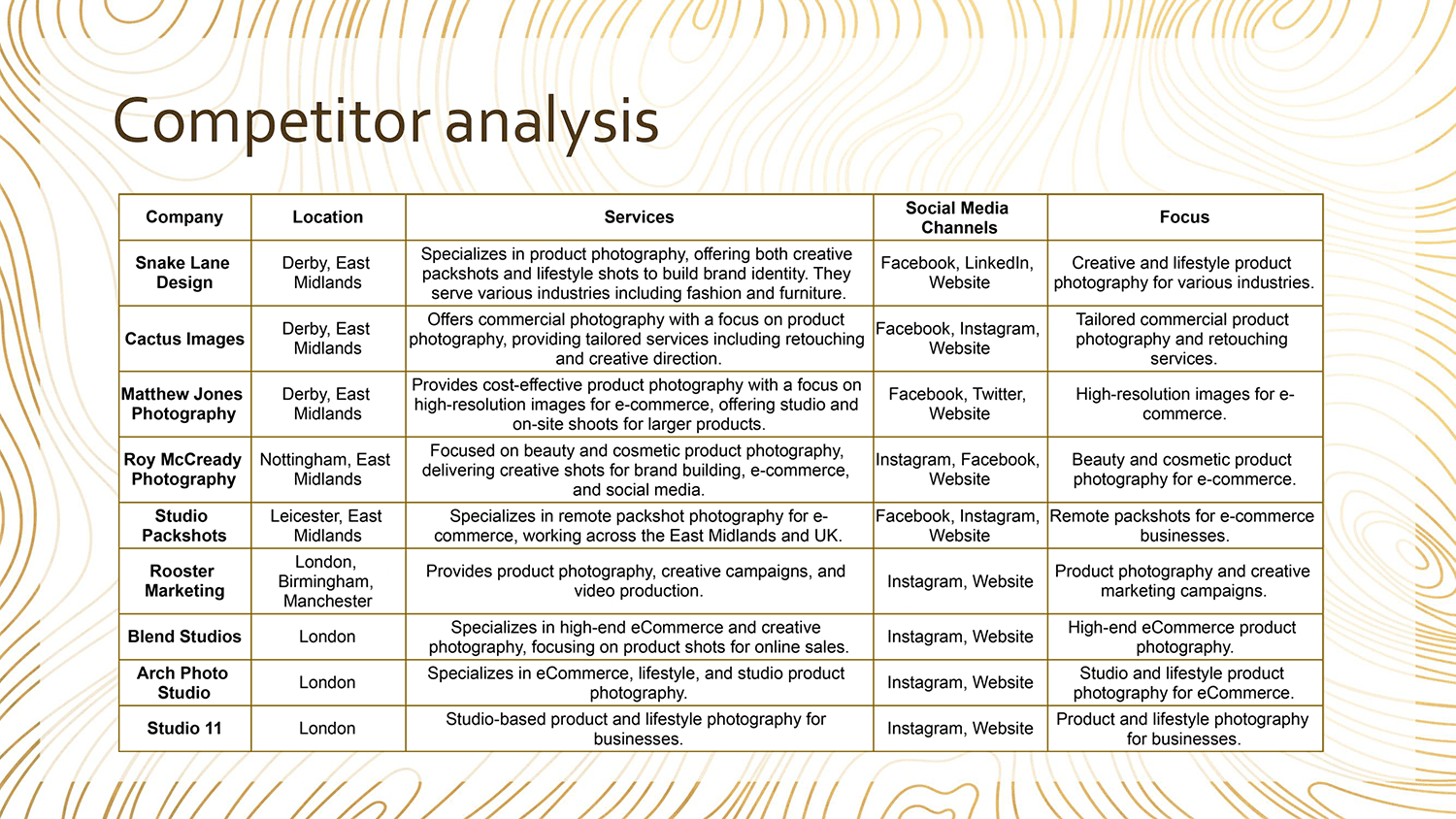
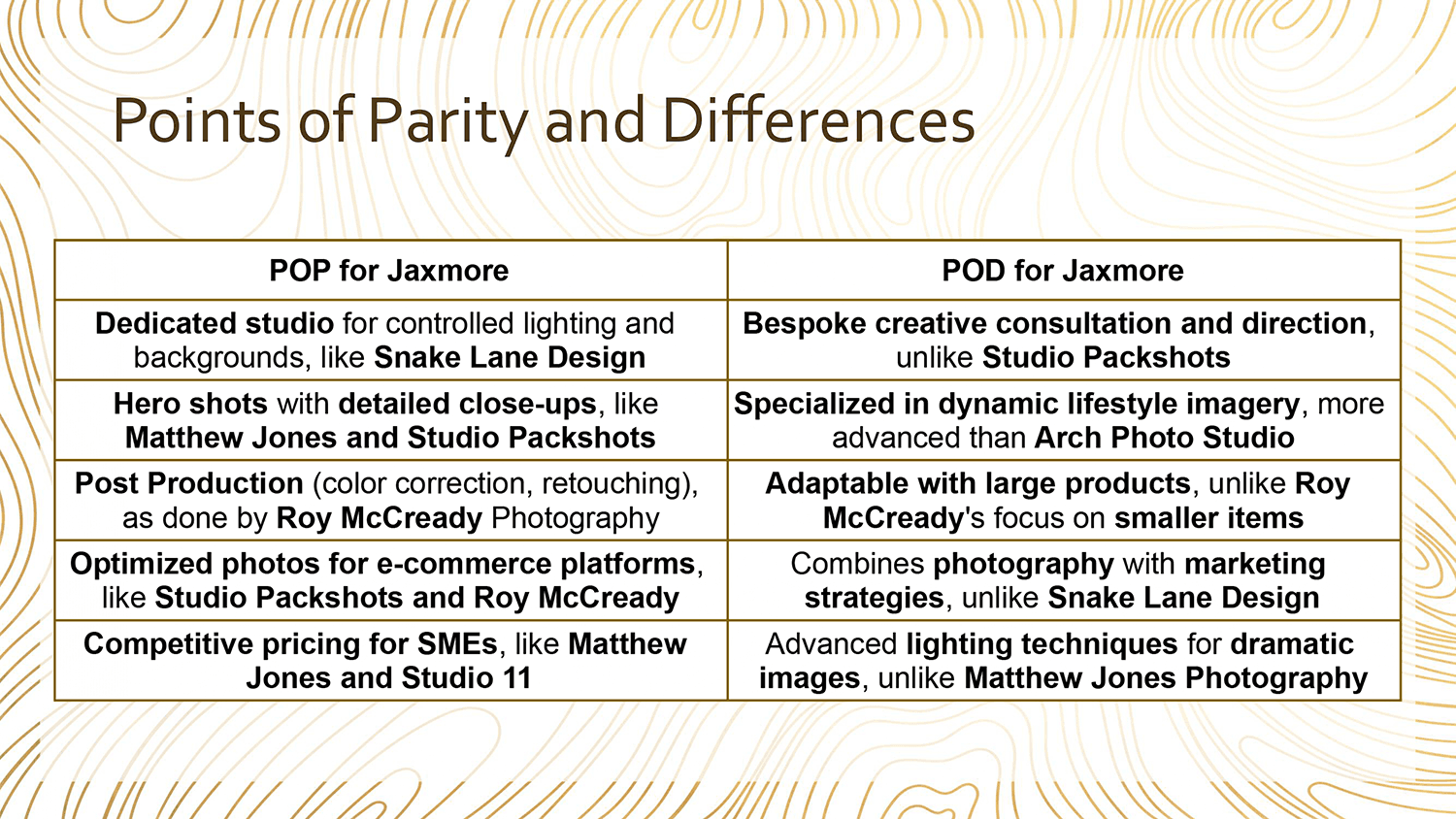
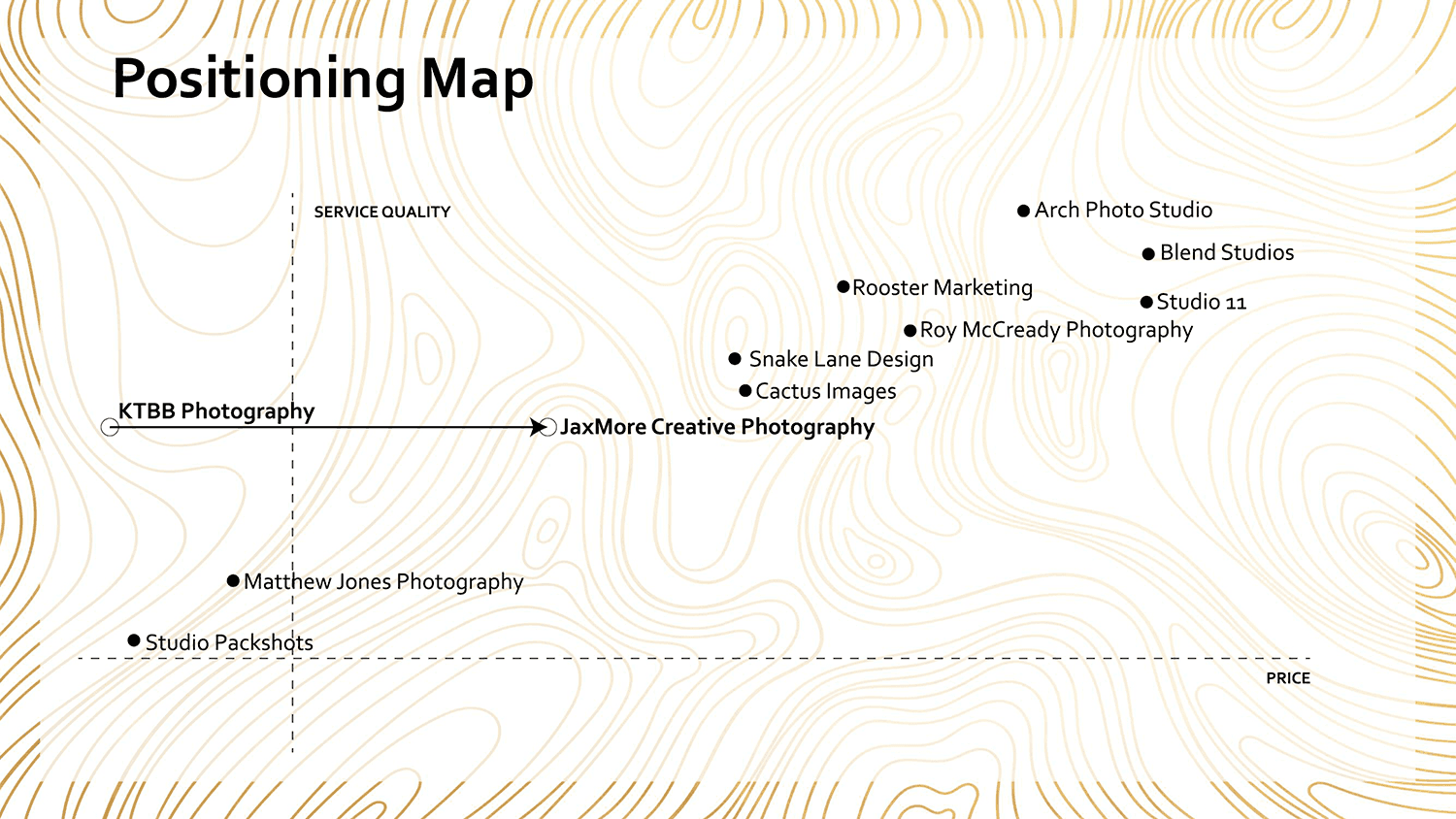
A competitor analysis mapped JaxMore against direct studios, freelancers, in-house teams, and AI tools. Points of parity (basic professional output) were stripped from points of difference (brand-consistent visual strategy, sustainability practice, drone and 360° capability, tech-enabled scalability).
A SWOT consolidated the findings. Strengths sat in technical range and strategic capability. Weaknesses sat in scale and brand recognition. Opportunities sat in the gap between what buyers wanted (brand-consistent premium visuals) and what most providers offered (one-off transactional shoots).
Strategic positioning
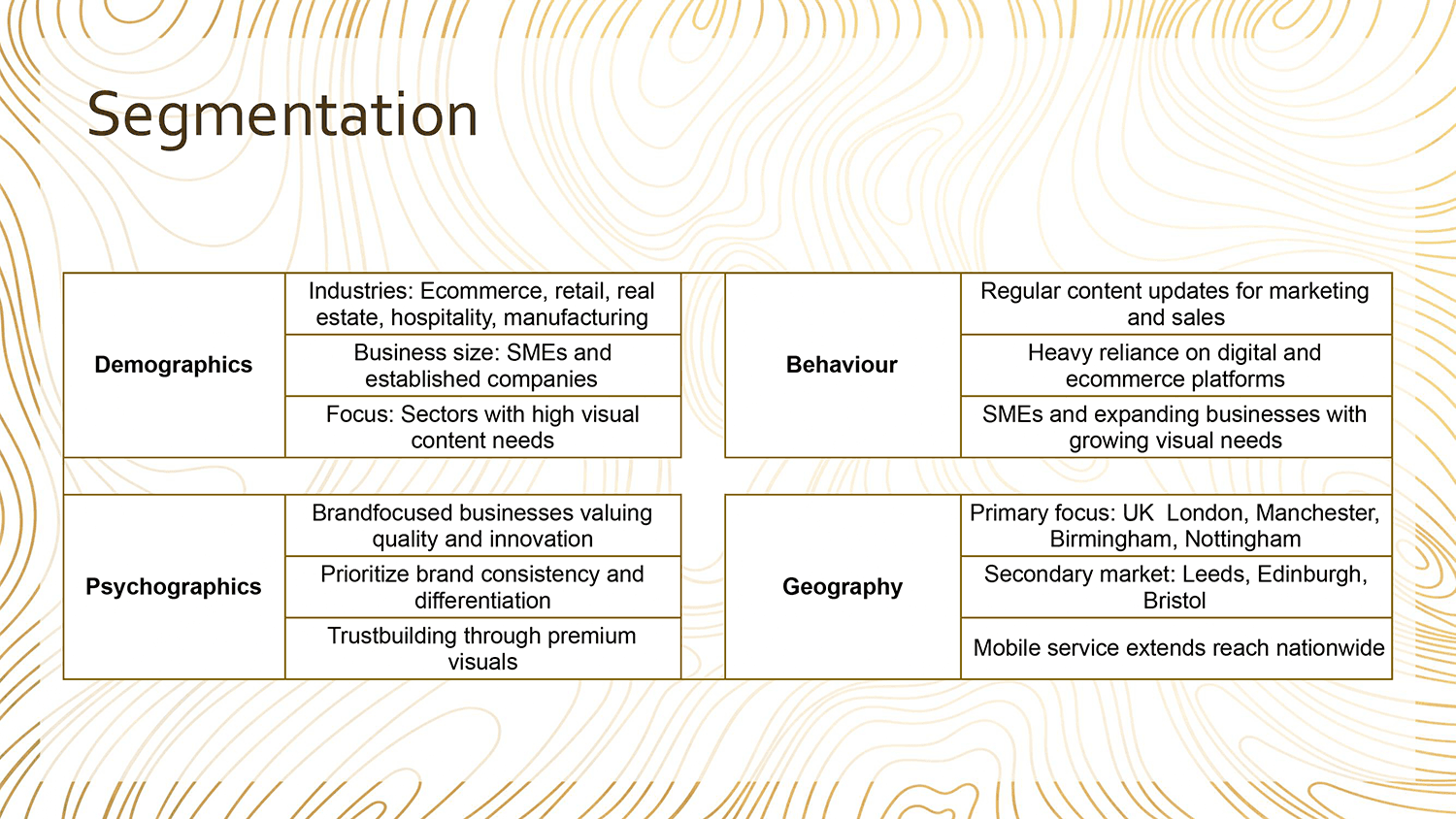
Segmentation
B2B buyers across e-commerce, retail, real estate, and manufacturing, segmented by business size (SMEs and established firms), geography (UK cities with nationwide mobile service), and brand maturity (brand-conscious vs. price-led).
Targeting
Brand-conscious businesses prioritising innovation and sustainability, with frequent content needs and the budget to invest in professional production.
Positioning statement
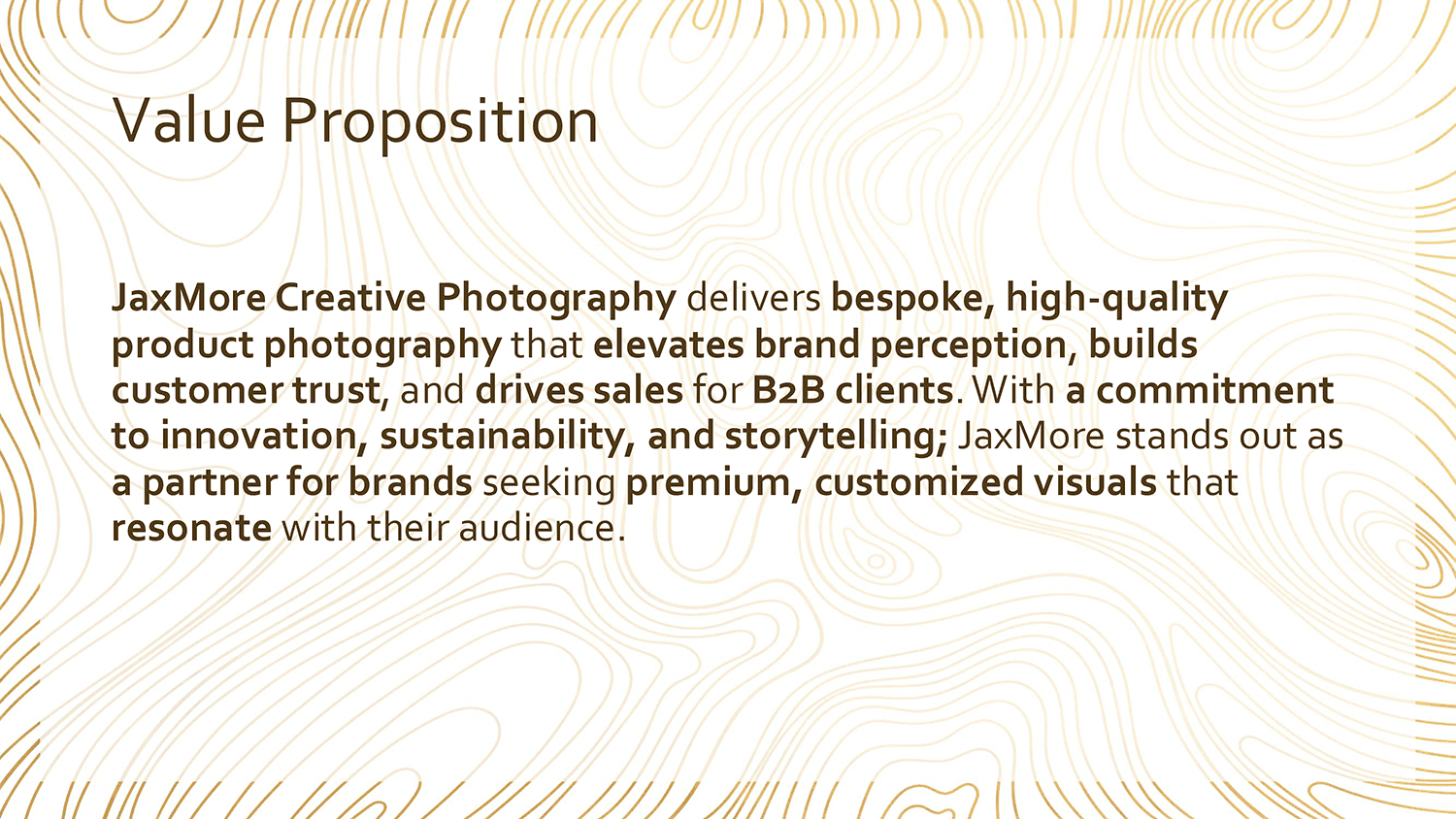
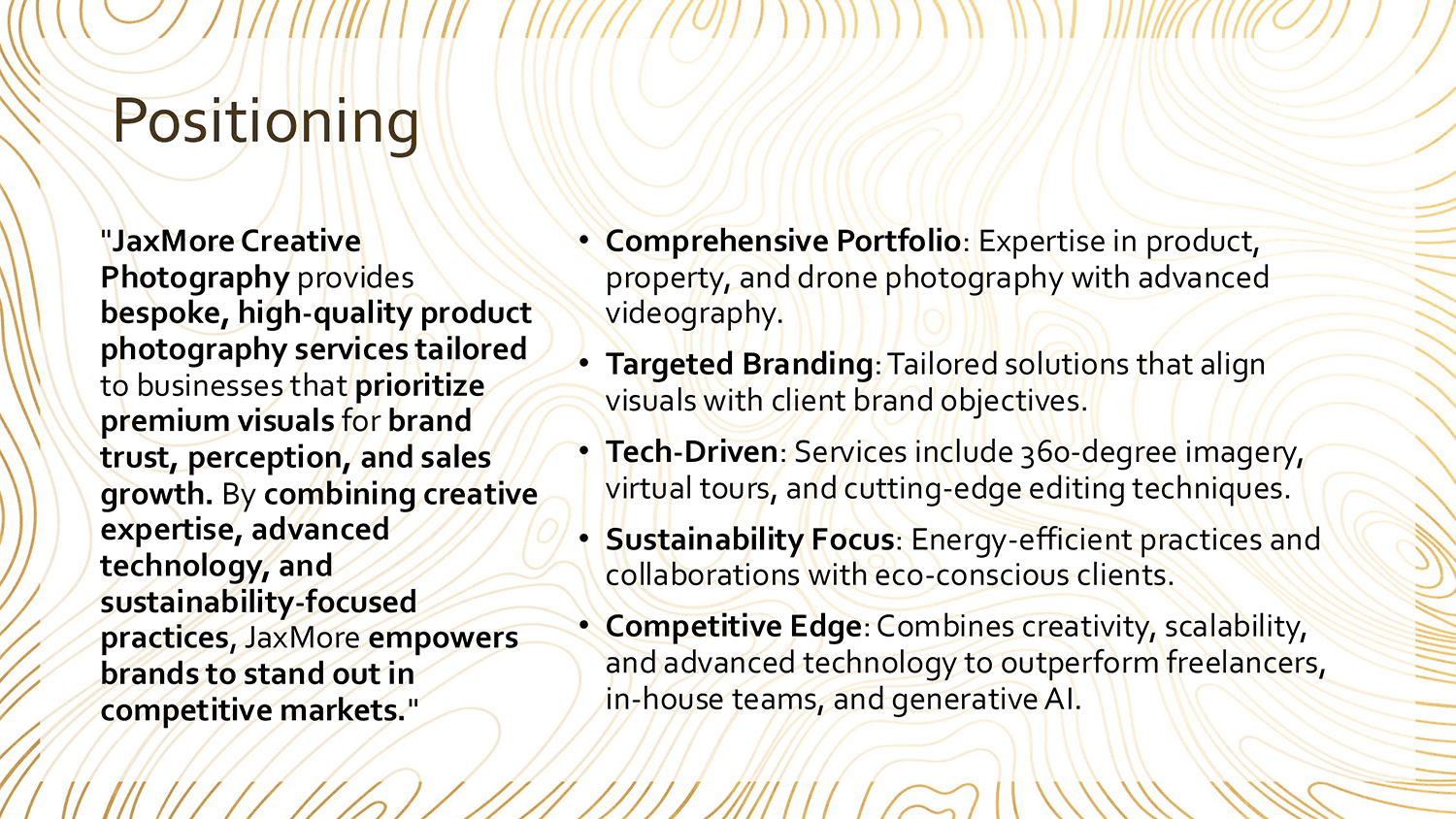
JaxMore Creative Photography provides bespoke, high-quality product photography services tailored to businesses that prioritise premium visuals for brand trust, perception, and sales growth. By combining creative expertise, advanced technology, and sustainability-focused practices, JaxMore empowers brands to stand out in competitive markets.
The positioning anchors on five claims: comprehensive portfolio (product, property, drone), targeted branding (visuals aligned to client objectives), tech-driven service (360°, virtual tours, advanced editing), sustainability focus, and competitive edge against freelancers, in-house teams, and AI.
brand transition
KTBB was the existing trading name. JaxMore was the new identity the brand was moving into. The repositioning strategy and the rebrand had to run as one campaign rather than two. The new positioning needed to land at the same time as the new name, or the rebrand would read as cosmetic.
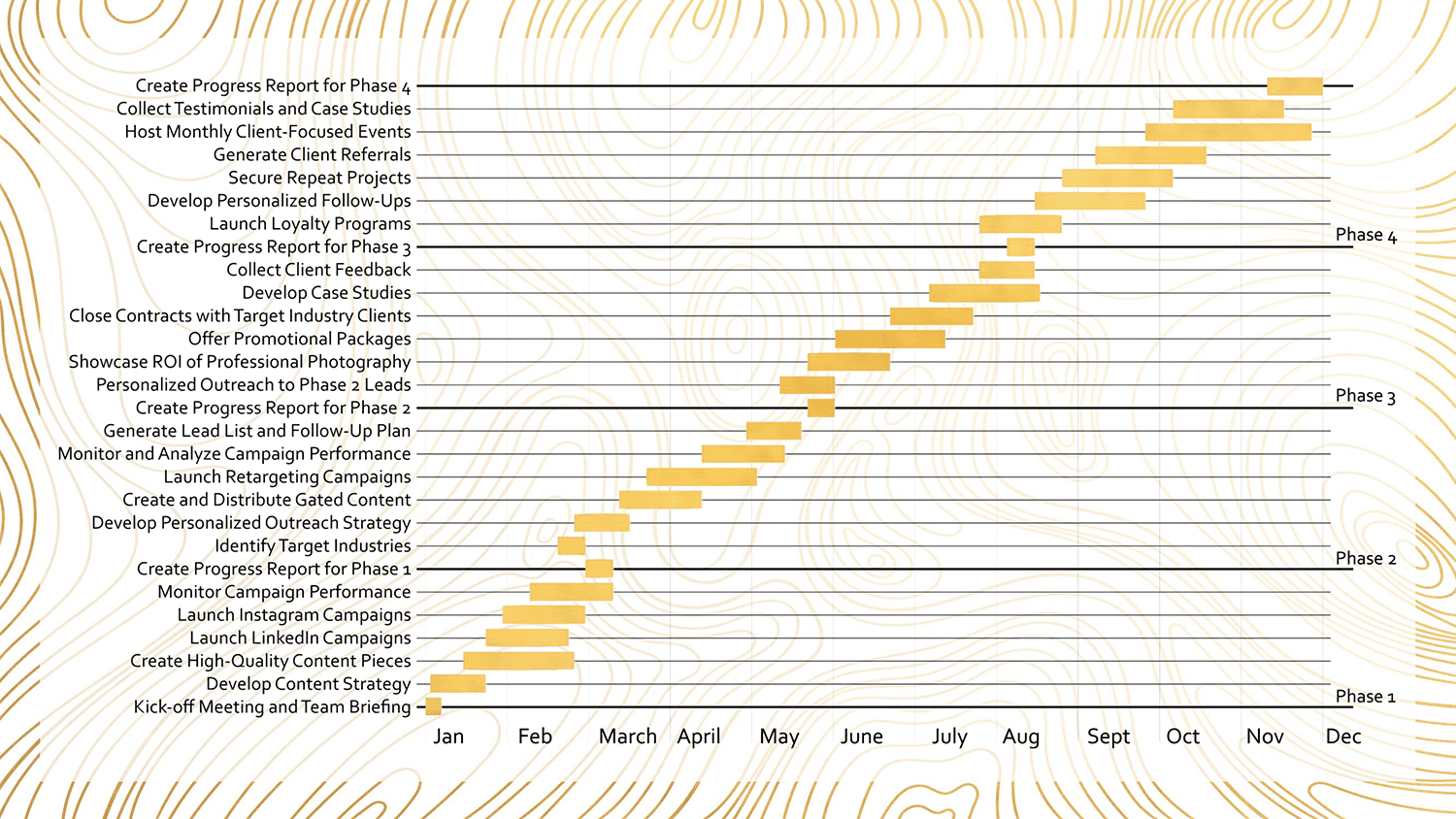
The transition was structured as a four-phase rollout. KTBB at the start. JaxMore at the end. Each phase carries specific objectives, channel emphasis, and messaging, designed to migrate existing buyer trust forward while introducing the new positioning to a higher-value buyer segment.
campaign architecture
The four-phase rollout was the spine of the campaign.
Phase 1. Introduce the strategic argument (professional photography as buyer-perception lift) under the existing KTBB identity. Goal: establish thought leadership and surface the primary research findings to the market before the rebrand.
Phase 2. Begin the brand transition, introducing JaxMore alongside KTBB as a sister identity. Goal: build recognition without abandoning the equity in the existing name.
Phase 3. Centre the new identity. JaxMore leads. KTBB sits as the legacy reference. Goal: complete the perceptual shift in buyer memory.
Phase 4. Consolidate JaxMore as the primary brand and retire KTBB from active use. Goal: lock the new positioning into the target segment built across the previous phases.
The campaign message, anchored on Keller's brand equity principle that messaging strengthens brand associations: Your brand deserves more than just photos. It deserves visuals that build trust, elevate your reputation, and drive real results.
channel mix
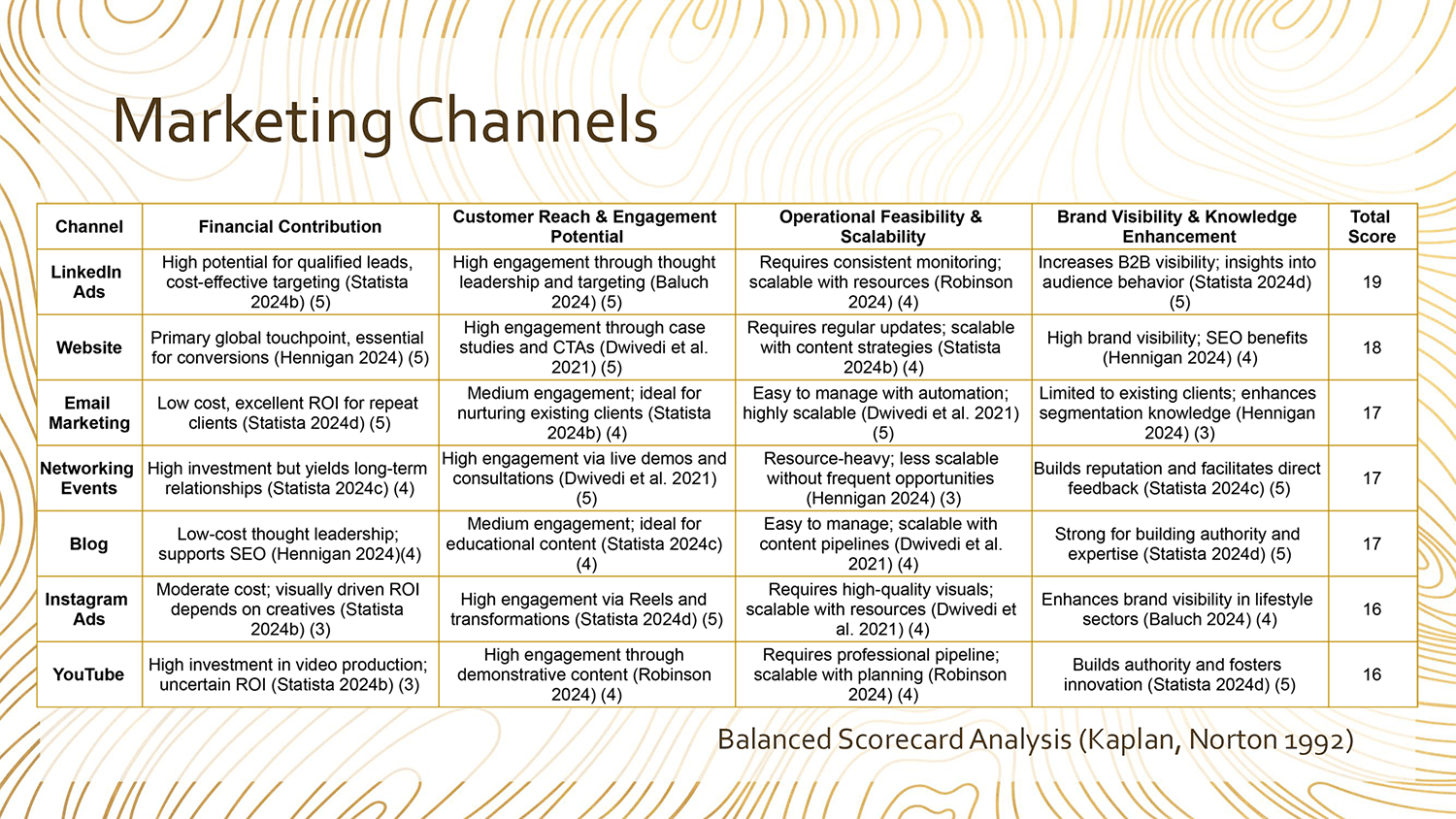
A Balanced Scorecard analysis (Kaplan and Norton) selected the channels and shaped what each was responsible for.
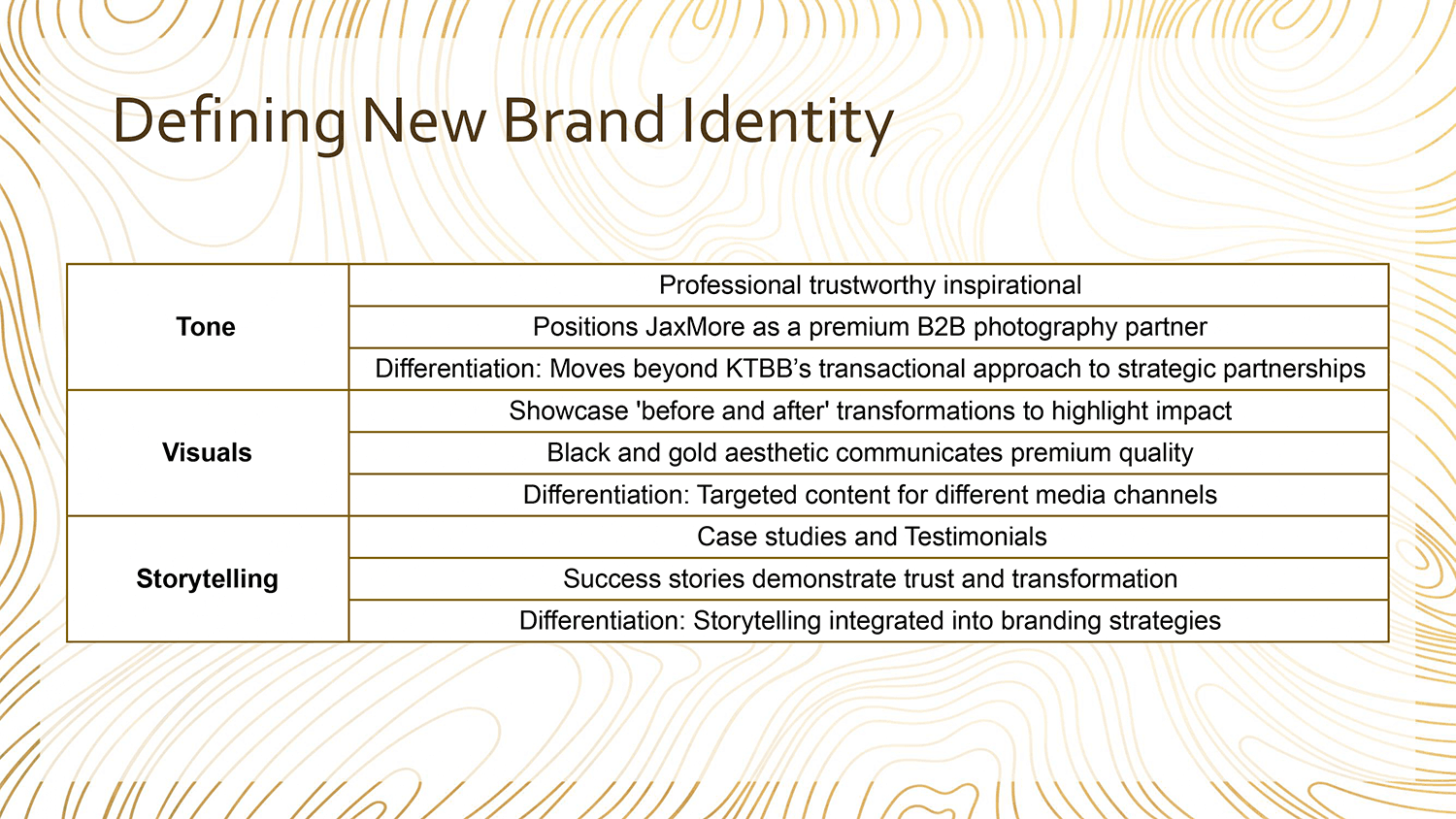
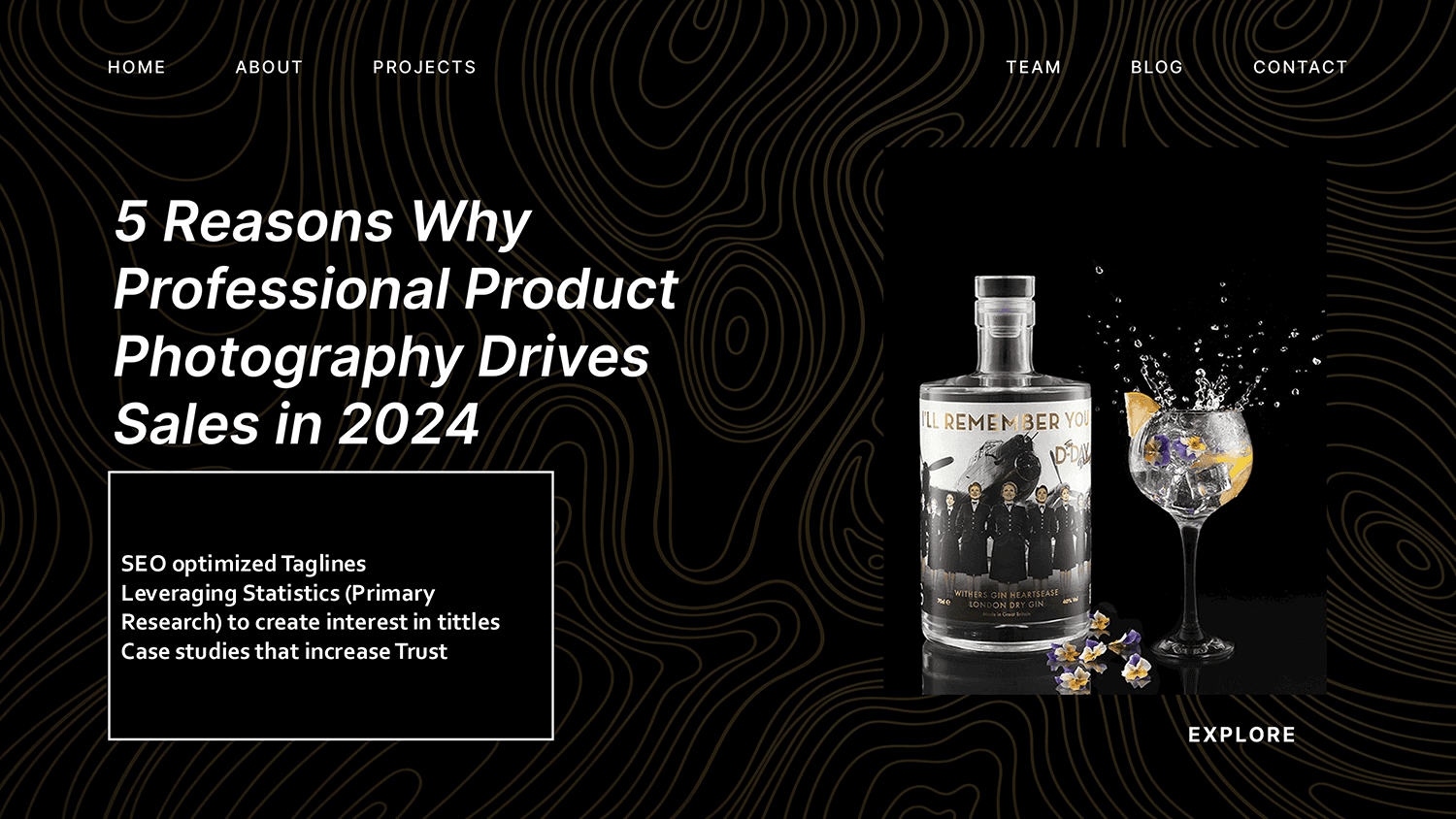
Blogs and articles. Thought leadership, anchored on the primary research statistics. Designed to position JaxMore as a strategic photography partner rather than a transactional studio.
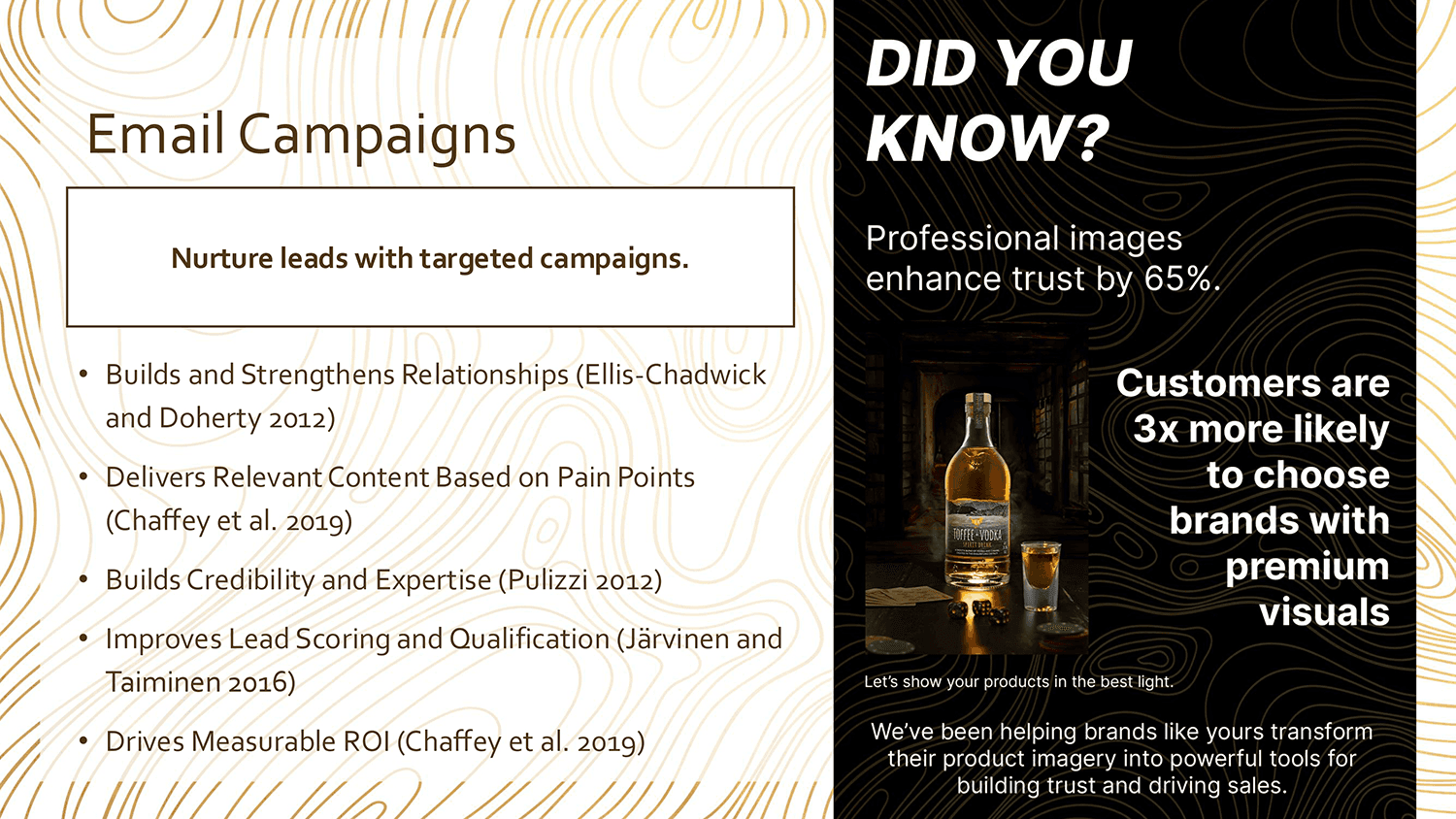
Email campaigns. Industry-targeted communications addressing specific buyer pain points and leading with research-backed claims rather than generic marketing.
Social media. LinkedIn for the professional buyer with ROI-led case studies. Instagram for the visually-oriented audience with before-and-after content and behind-the-scenes process. YouTube for longer-form storytelling around the brand's creative work.
Paid advertising. LinkedIn, Instagram, and Google search, focused on the targeted buyer segments identified in the strategy.
The marketing mix (7Ps) was applied across the channels to keep consistency between Promotion, Physical Evidence (portfolio, testimonials, social presence), and Process (consistent client experience from brief to delivery).
measurement
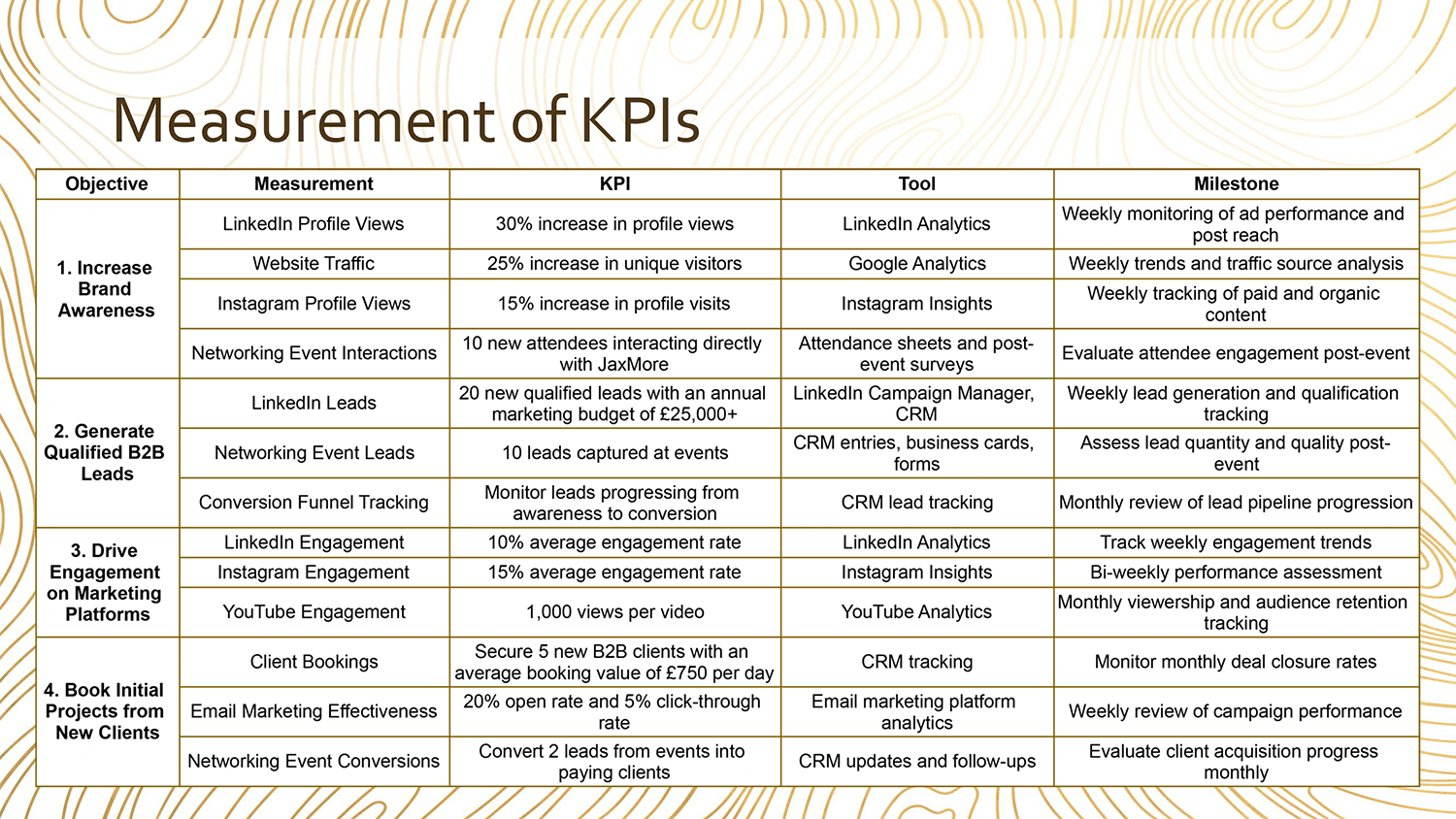
KPIs were defined per phase and per channel, with thresholds set to allow course-correction without abandoning the strategic spine.
Amendment strategies were built in for each scenario: under-performance against perception KPIs would trigger messaging recalibration; over-performance on awareness would trigger acceleration into the next phase.
The measurement loop assumed the strategy would need to evolve. The primary research provided the analytical baseline. The KPIs gave the system a way to know if the strategy was still working as it deployed.