

TAD is a menswear startup and a challenger brand, conceived for a Gen Z professional audience and built to take on the formalwear category rather than fit into it.
I joined at inception as founding Brand designer, building the brand alongside the founder.
The role was full-spectrum: proposition, strategy, visual and verbal identity, content systems, and go-to-market, taking TAD from concept to profitability within its first year.



The distinctive offer
The work began with the brand's core offer. TAD sells tailored formalwear for men, affordable but not cheap, through a digital made-to-measure model: the customer submits their own measurements and receives a garment cut to fit.
Mapped against the market, the offer occupied a real gap. Fast fashion sold formalwear but did not tailor. Traditional tailors tailored, but were expensive and brick-and-mortar only. TAD sat between them: a tailored fit, mid-priced, fully online.
No competitor occupied that space, which meant the launch task was not displacement but category education. The points of difference were structural, not cosmetic: price, the made-to-measure product, the self-measurement service, and online reach.
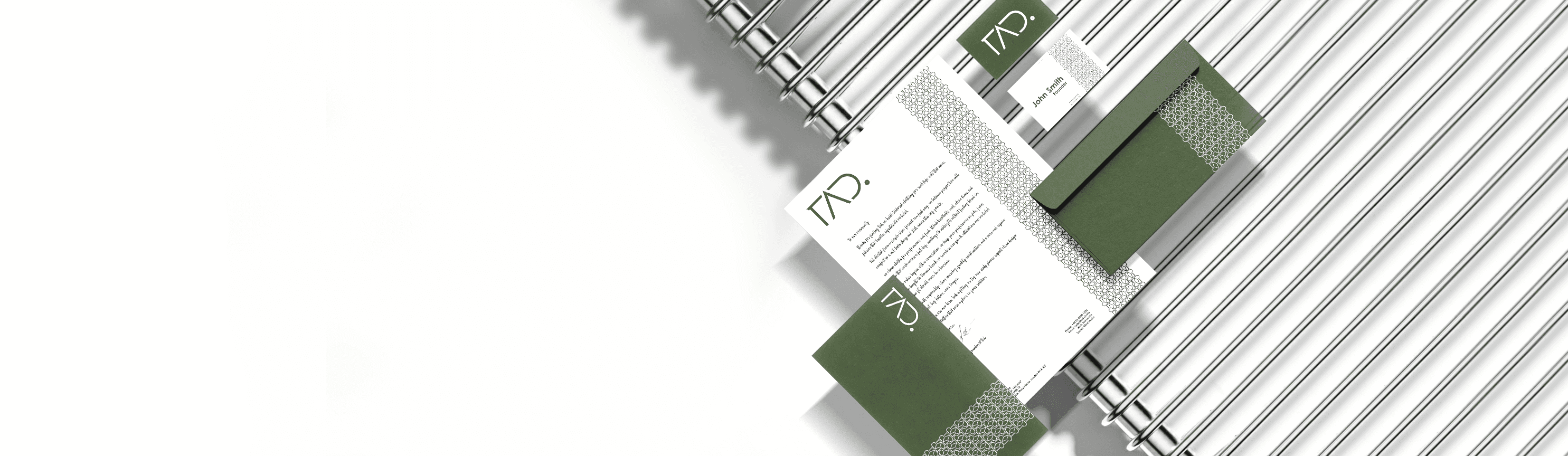
As a startup, there was no brand to refine and no position to defend. Every decision was made from the ground up and built to hold at scale, as a flexible operating system rather than a fixed identity.







The consumer
TAD is built for one consumer: the Gen Z professional, just entering the workforce. A first corporate job brings a dress code, and a sudden need for formalwear they have no relationship with.
What defines them
Clothing is identity. A generic corporate uniform reads as erasing themselves.
Budget-constrained, not cheap. Limited spending power,
but no tolerance for disposable products. They want value.
Digital-native. They research and buy online A brand with no digital presence does not exist to them.
Socially driven. They trust peers over advertising. A brand they adopt, they recommend.
Sceptical of tradition. Heritage alone does not persuade them. Relevance does.
The tension TAD answers
The workplace asks them to conform. Their values ask them to stay themselves.
Fast fashion lets them comply, cheaply and generically.
Tailoring offers individuality, at a price and a process built for someone else.
TAD is the gap between: formalwear that meets the dress code without surrendering the self.
premium
price
affordable
price
generic
fit
tailored
fit
fast
fashion
cheap
no tailoring

tailored
mid-price
online
traditional
tailors
tailored
expensive
in-stores
Segmentation
TAD's market was cut three ways: demographic, behavioural, psychographic. The decisive cut was not age but behaviour and mindset, a group that treats clothing as identity, spends carefully, lives online, and advocates for brands it believes in. One segment fit: the emerging Gen Z corporate workforce.
targeting
A broad launch splits budget and builds no community. TAD committed instead to a single beachhead segment, the Gen Z professional. One audience, one message, one community with the advocacy to grow the brand from within. Win one market first, broaden later.
positioning
TAD's position was not constructed, it emerged from the offer meeting the audience: made-to-measure built for self-expression, mid-priced, fully online, set against a generation that wanted customisation but could not afford traditional tailoring. The result, the place TAD owns: tailored formalwear made genuinely accessible.
positioning statement
For the emerging Gen Z corporate workforce, TAD is the formalwear brand that delivers a genuinely tailored fit at a price they can afford, without setting foot in a store.
Trenchant
Sharp and direct. TAD holds a point of view and states it without.
Alternative
Against the mainstream by choice. The option for people the default never served.
Disruptive
Built to challenge the established order of its category,
not to be accepted by it.
brand personality
A brand built for a behaviourally defined audience has to behave like that audience. TAD's personality was not invented to stand out. It was modelled on the people it was built for.
Gen Z's relationship with the world is questioning and oppositional, unwilling to inherit a norm just because it is the norm. TAD takes that exact posture and turns it on its own industry. The way the audience behaves toward society, the brand behaves toward formalwear and the conformity of corporate dress.
It never argues with its customer. It argues, on the customer's behalf, with the category. That is what makes the personality land: by rebelling against the same things its audience rebels against, the brand becomes recognisable to them as one of their own. To the industry, TAD is a challenger. To its customer, a friend and advocate. The disruption is what earns the friendship.
how it behaves
These are not surface tone. They are the operating logic of the brand, and they govern it on every level. Visually, the identity rejects the conventions of heritage tailoring. Verbally, the voice is direct and oppositional. Strategically, every decision is measured against one question: does it challenge the category, or concede to it?

the content system
Social media demands volume, and a startup cannot fund a traditional production pipeline at that scale. The brand was built to be scalable from the inside.
Generative AI was used as a production tool within the content system, extending the brand's visual language across imagery, illustration, and motion at the volume brand actually requires.
The strategy, the brand, and every creative decision sat with the team. AI handled execution at scale.
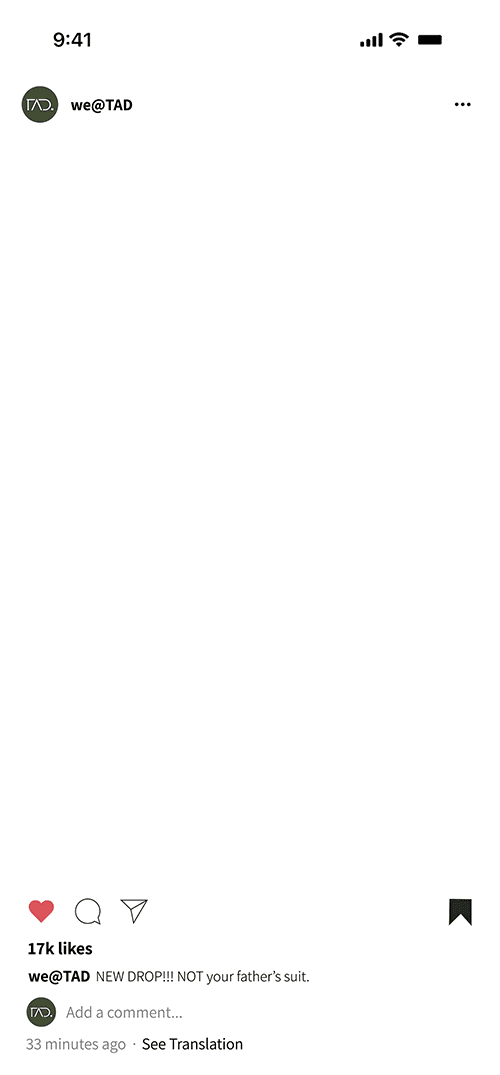
Social media was the primary channel for an audience that lives there, and the brand was built to perform on it. The work spanned the full surface: profile, feed, stories, reels, carousels, and the launch film, all designed as one connected presence rather than a series of one-off posts.

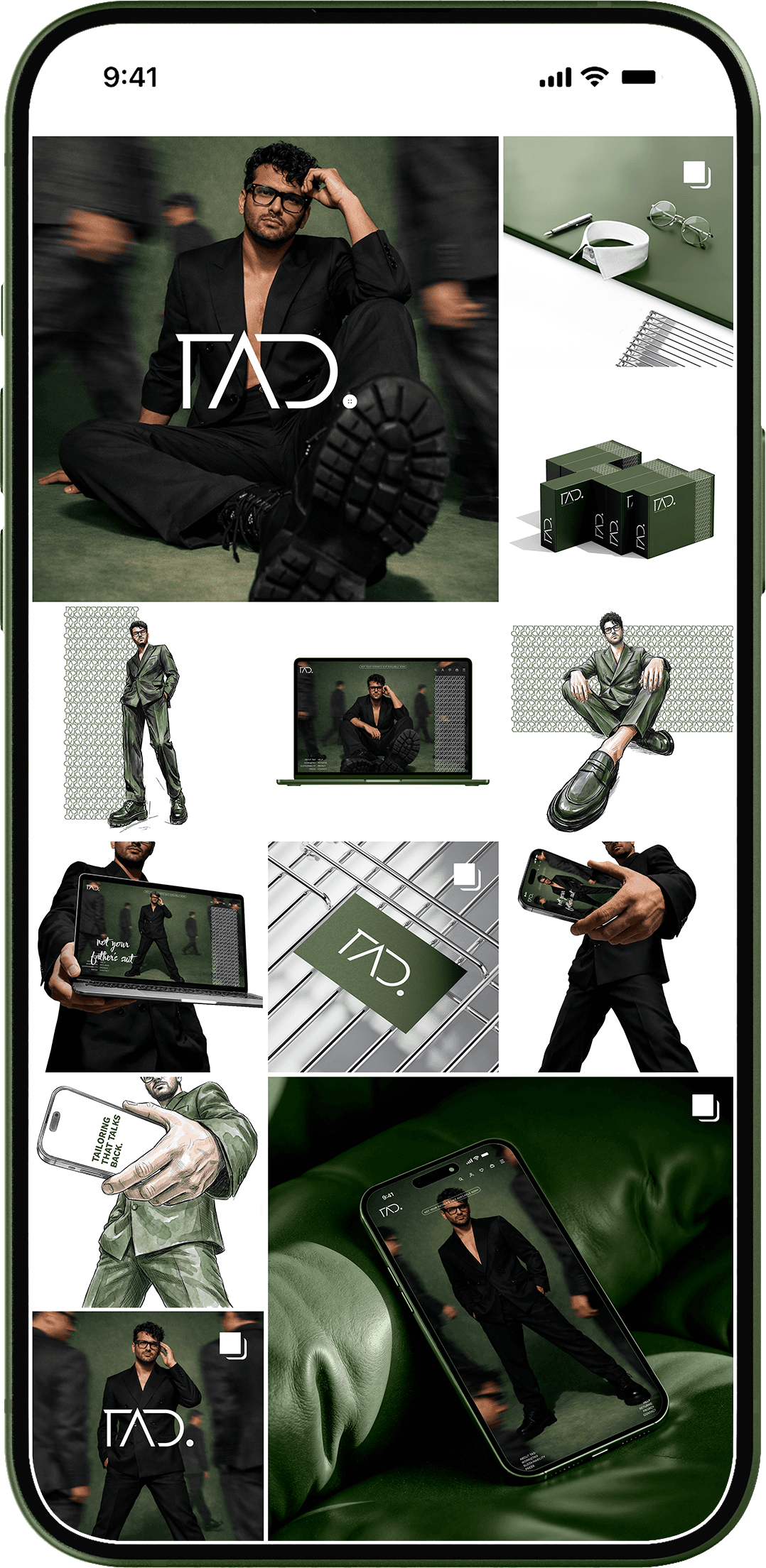

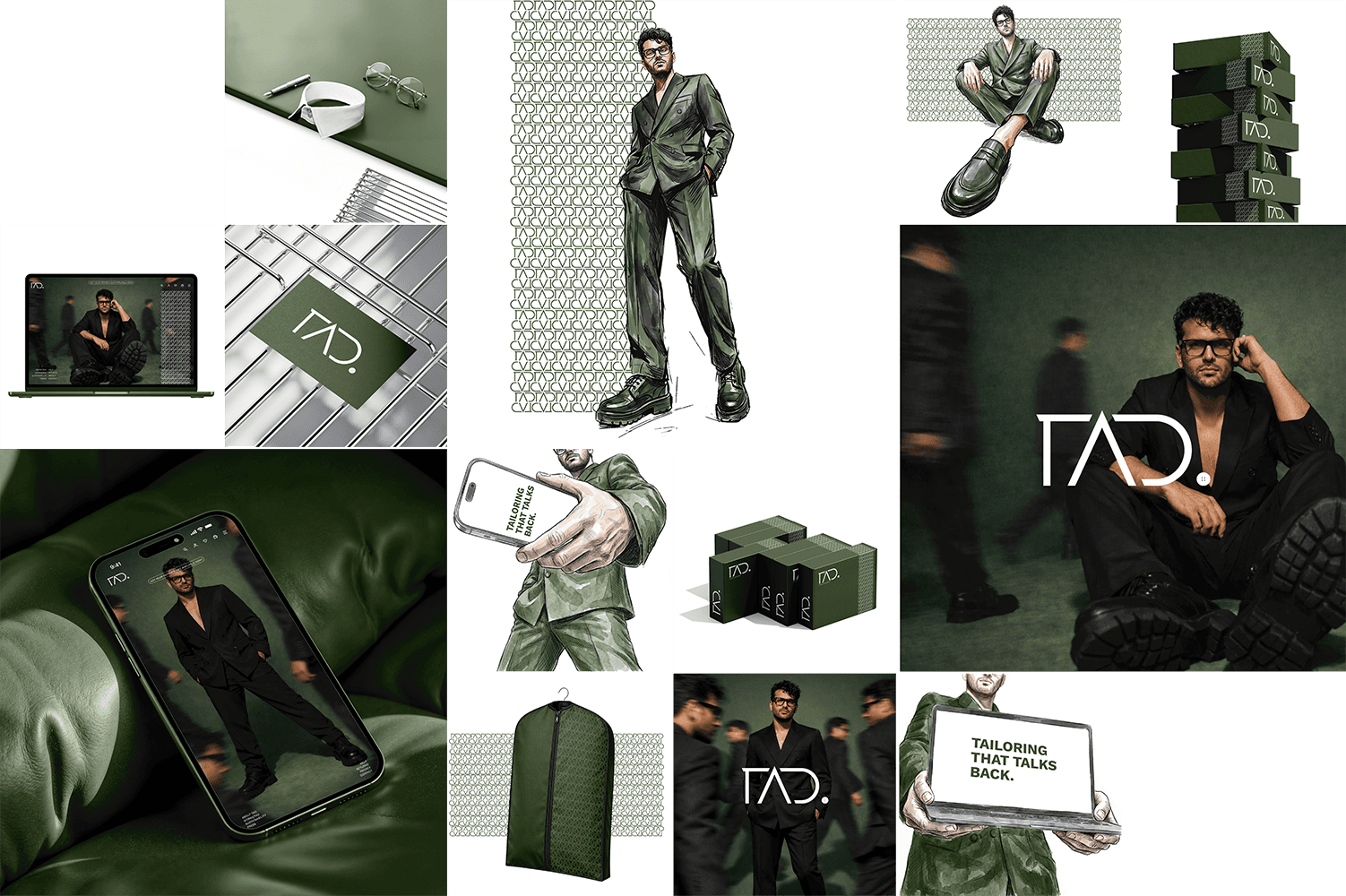
Digital application: social media
The visual language was built to scale. Brand imagery, illustration, motion, and campaign content were produced through repeatable systems, so a startup with no traditional production budget could publish at the volume social actually demands without losing coherence. Every post, story, and reel reads as the same brand.
The launch film carried the heaviest weight: it stated the brand, showcased the product, and built a lifestyle the audience could see themselves in. The rest of the social system supported it, giving the launch a connected ecosystem to land into rather than a single moment.



Website
The website was the brand's home and the point of sale. It was designed for an audience that buys on a phone first and a laptop second, so both were treated as primary surfaces, not one as an afterthought.




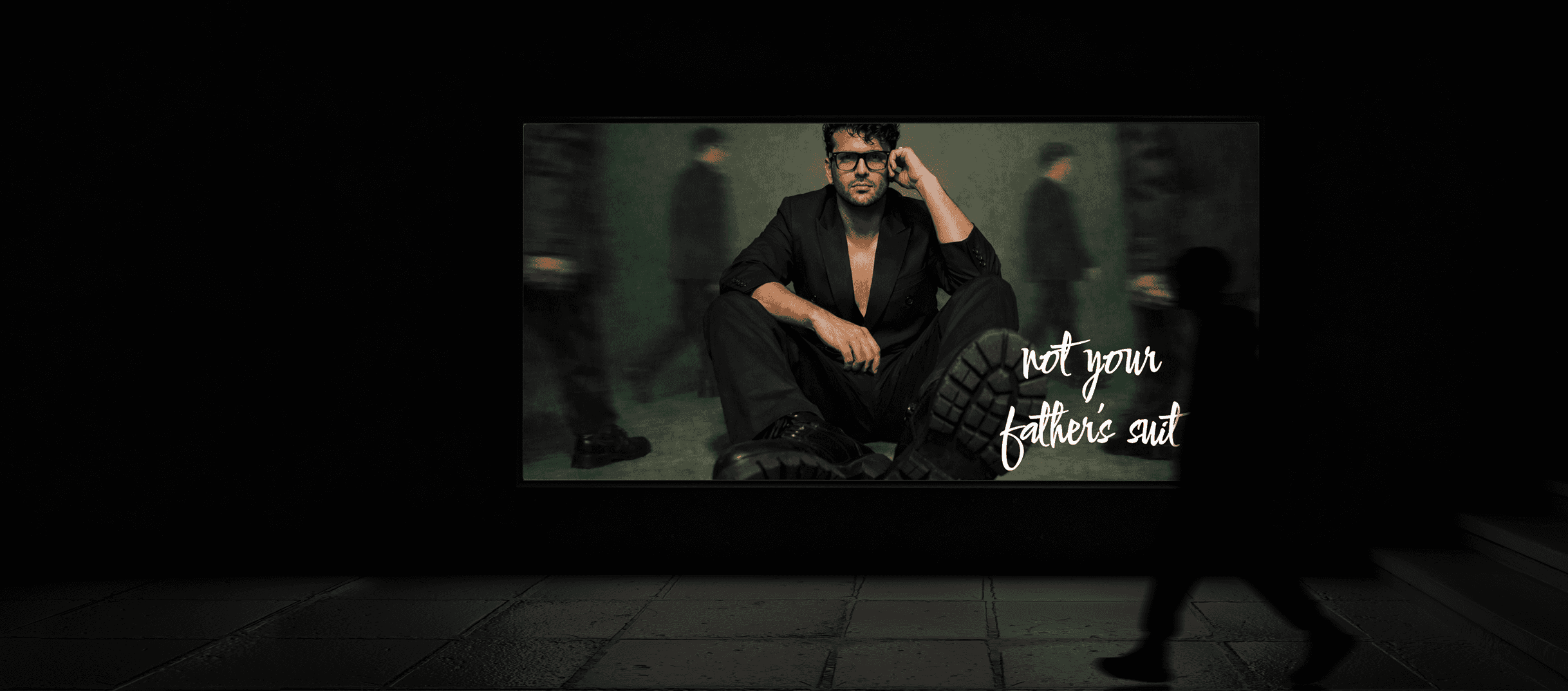
Launch Campaign
The launch collection stated the brand's whole position in four words. Tradition is not the enemy. Conformity is. The line draws the distinction TAD is built on: a generation refusing to dress as the previous one was told to.
The campaign ran across every touchpoint that mattered to the audience.

The choice of channels mirrored the brand strategy. Digital-first, where the audience lives. Public transport, where the audience travels to the workplace the brand exists to dress them for.


Results
Profitable in Year 1
Broke even and entered profitability within twelve months of launch.
6.7 ROAS on Google Ads, 2.8 ROAS on Meta
Paid performance built through continuous data-led targeting and creative refinement.
+17% conversion rate
A price-anchoring strategy across the website cut cart abandonment and lifted purchase rates.
10,000 organic community, +28% Instagram growth
Audience built from zero through the brand's owned content systems.
+8% repeat consumer rate
CRM and email retention campaigns built a returning customer base from a one-year-old brand.


