Stick and Ribbon is a UK-based women's fashion boutique offering curated premium brands and personalised styling services. The brief was a brand audit and refresh, not a ground-up redesign, but a strategic repositioning of an existing identity that had accumulated inconsistencies across its touchpoints.
The brand had something valuable: genuine customer loyalty,
a distinctive service model, and real equity in its community. What it lacked was the identity to communicate that value clearly to new buyers.
The scope covered brand audit, repositioning strategy, brand personality and values, visual and verbal identity redesign, brand guidelines, and a customer journey framework.
ANALYSING BRAND ELEMENTS












The audit surfaced a brand with strong foundations and a fractured surface. The logo positioned well: its typographic device and clean execution held its own against higher-end references.
The email marketing was consistent and well-written. The brand ambassador was on-target.
Everything else was working against them.
The website was difficult to navigate, with an undefined USP and inconsistent information across pages. Imagery was largely supplier-sourced, applied without any brand treatment, creating visual incoherence across platforms. The social presence was effective in tone but low in interactivity, repetitive in content, and missing any visible marketing intent. Most critically, the brand was being perceived as expensive and luxury-adjacent, but the actual experience was accessible, personalised, and community-driven. The brand was being read as something it was not.
BRAND
ARROW MODEL
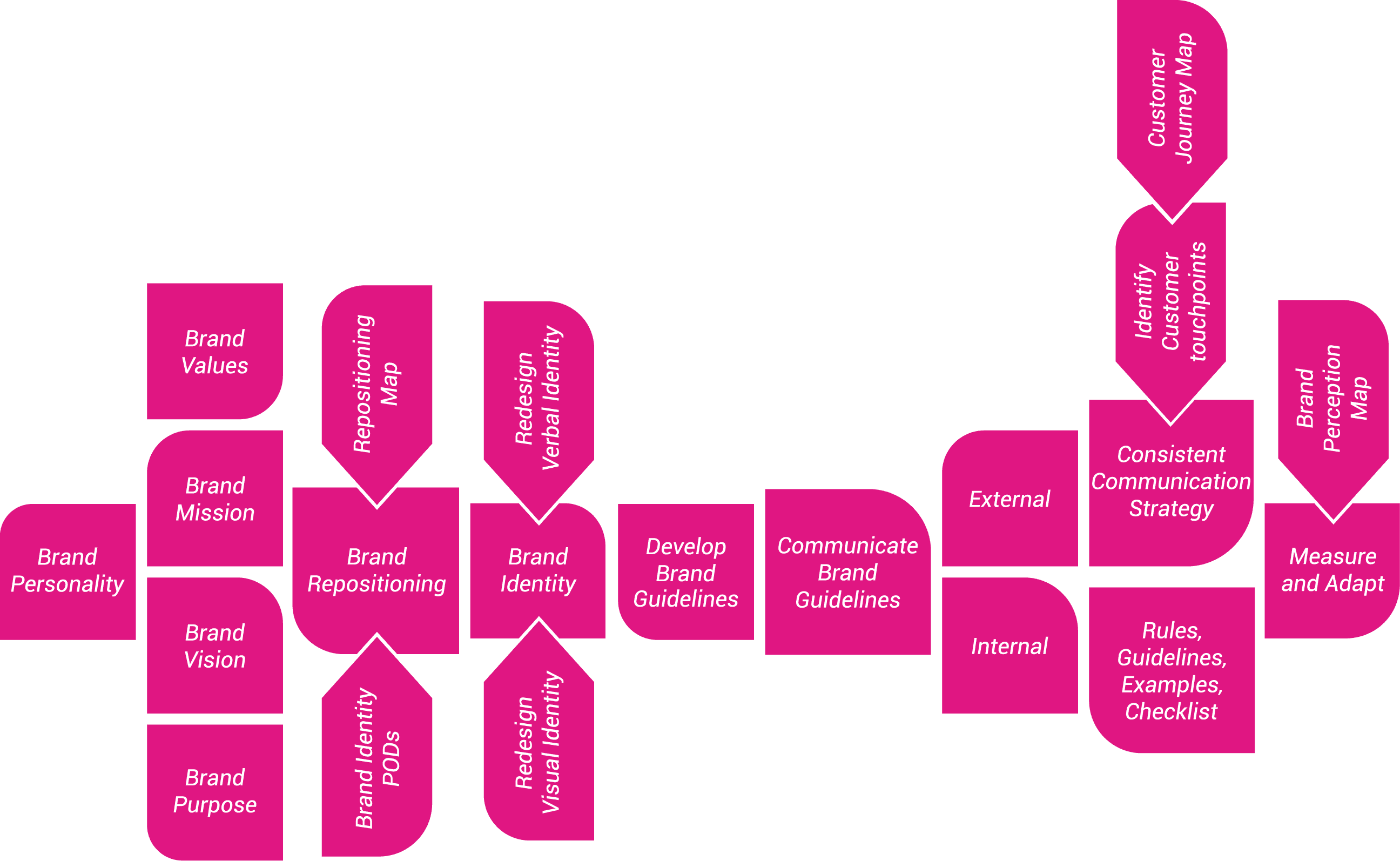
The brand arrow model provided the strategic architecture for the project. It sequences brand development as a linear progression, from personality through repositioning, identity redesign, guidelines, communication strategy, and into measurement. Its value is structural: it clarifies what has to be decided before what, and ensures each output is grounded in something that came before it rather than produced in isolation.
Applied to Stick and Ribbon, the model established that no identity decision could be made before the repositioning question was resolved. Personality, values, mission, and vision had to be locked before a single visual element was touched.


MOMENTS
OF TRUTH
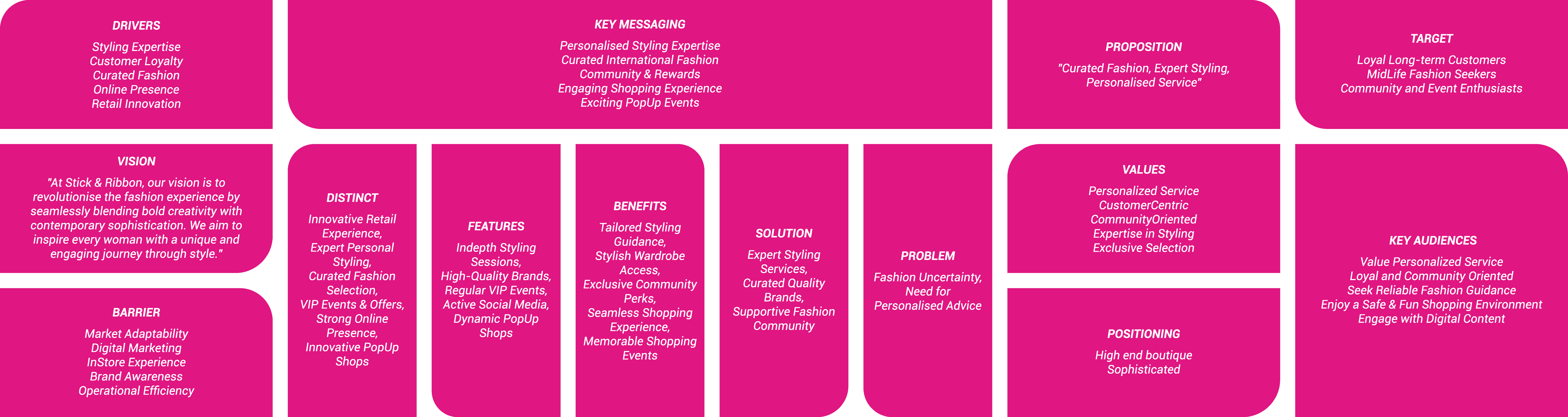
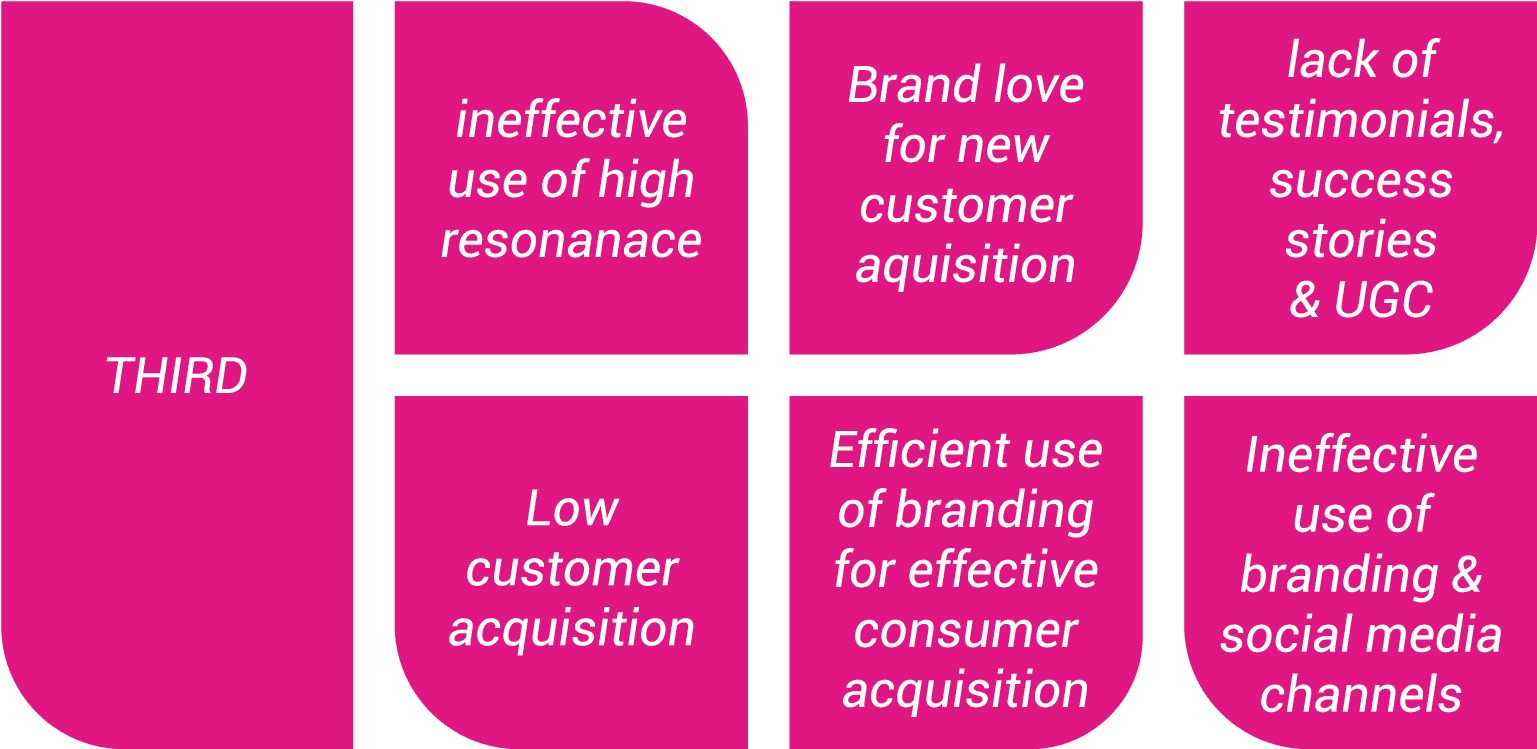
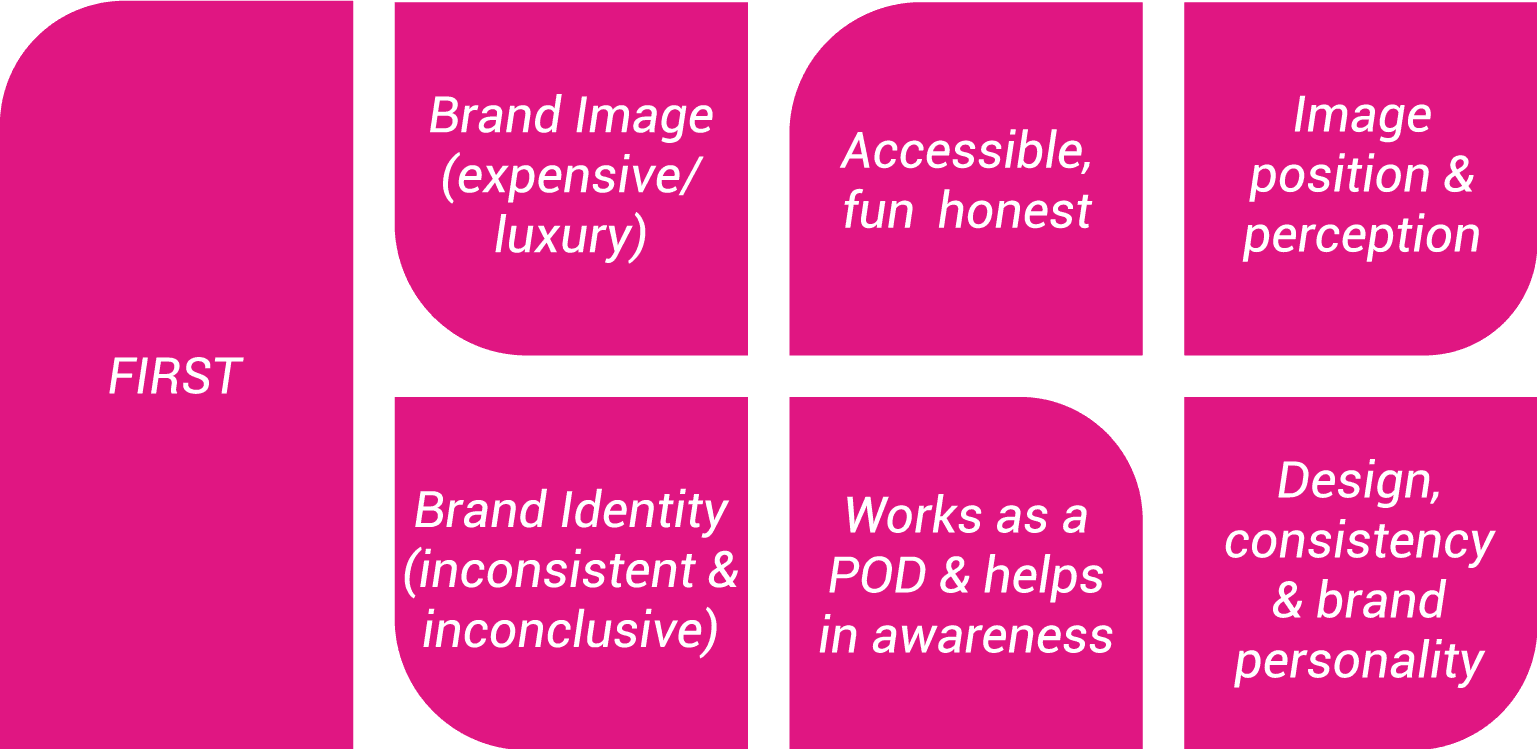
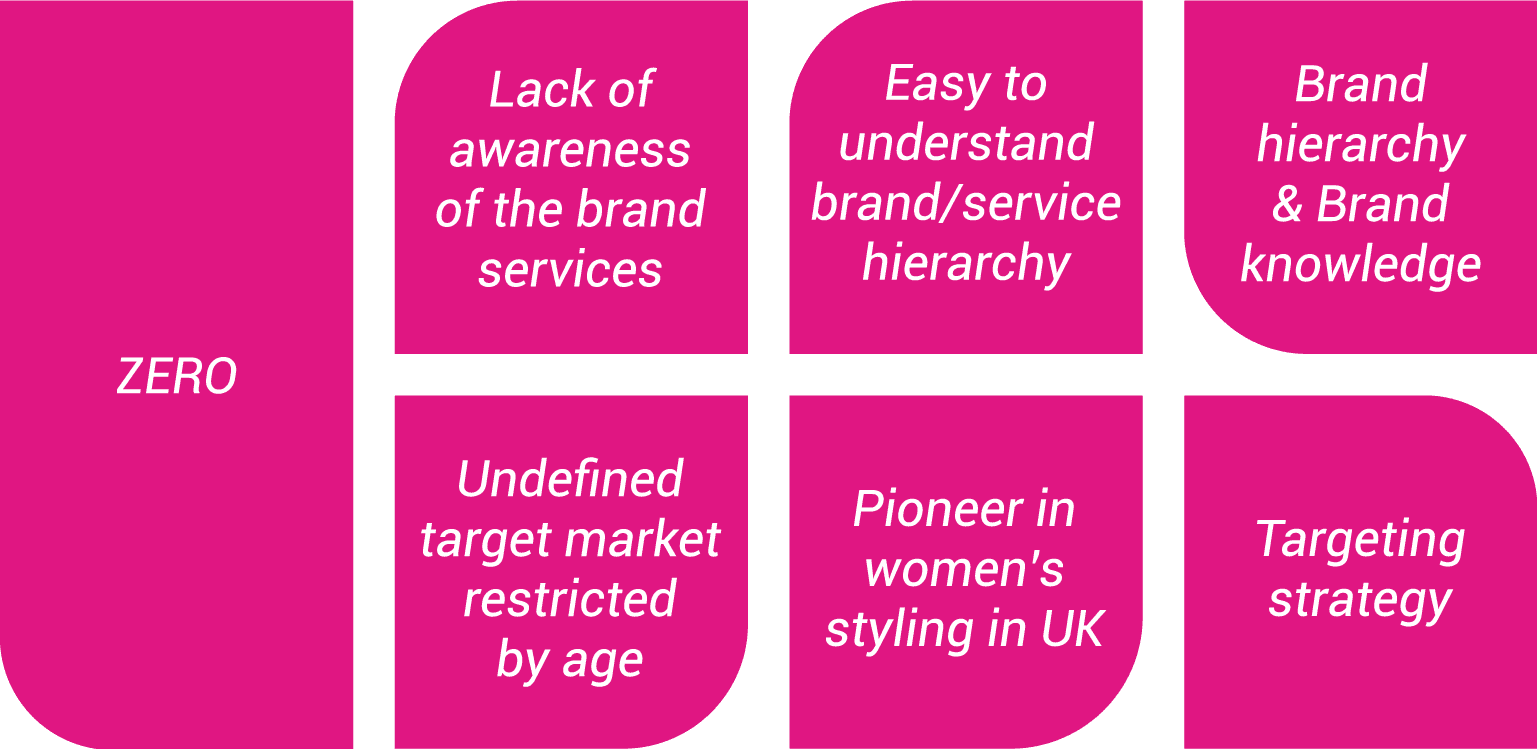
The Moments of Truth framework maps a brand's current state against its future prospect across four customer touchpoints (Zero, First, Second, and Third) and identifies the gap between them. It is useful precisely because it connects brand gaps to the customer experience rather than treating them as internal design problems.
The most significant gaps:
At Zero: No clear service hierarchy and a target market restricted by age rather than value-set.
At First: A visual identity inconsistent enough to undermine its own potential as a point of difference.
At Second: An undefined user experience: the expertise existed but the customer journey to deliver it legibly did not.
At Third: High existing loyalty going unused. Testimonials, success stories, and UGC were absent, meaning the brand's most persuasive asset, its community, was not working for acquisition.
it needed
a new way of
being Understood
The gaps across all four moments
pointed in a single direction
The brand
did not need
a new product
brand development
strategy
The strategy map translated the objective into a sequenced process. Brand personality defines the foundation. Repositioning follows, anchored in Points of Difference. Identity redesign, verbal then visual, builds on top of that. Guidelines develop and communicate the system internally and externally.
A consistent communication strategy maps the customer journey. Measurement closes the loop.
BRANDING
OBJECTIVE
Reposition and redesign the brand to establish a consistent, resonant, and beloved identity with an exciting personality across all touchpoints, enhancing market presence, increasing brand knowledge, and driving new customer acquisition through leveraging existing consumer loyalty.
REPOSITIONING
STRATEGY
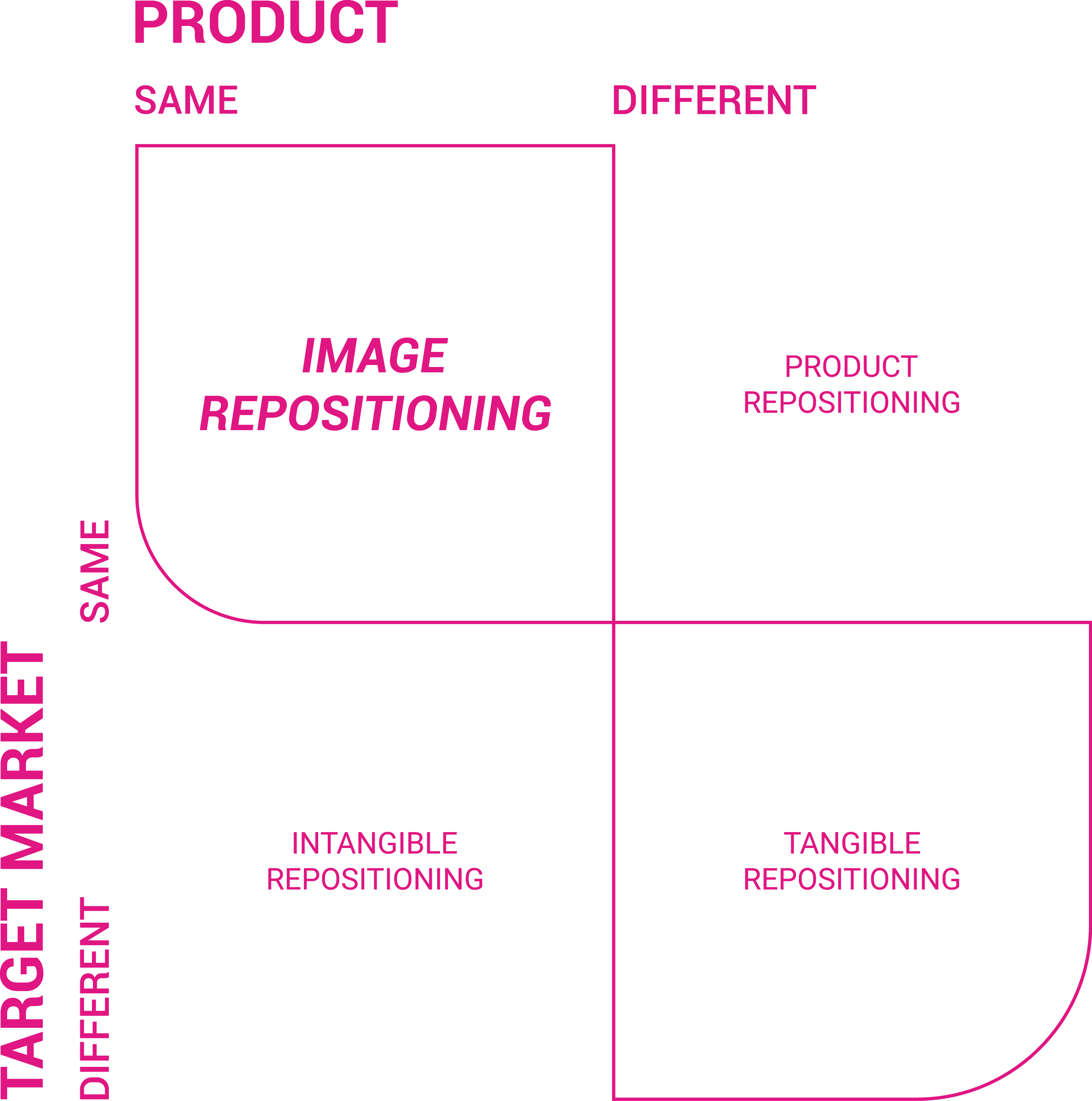
Defined by the fact that the offer itself did not need to change image repositioning is the most precise form of brand work.
The services, the expertise, the community model: none of these were the problem. The problem was that the brand's identity was communicating something inconsistent with what the experience actually delivered.
For women who seek a bold and sophisticated fashion experience, Stick and Ribbon is the brand that revolutionises style through creativity and contemporary elegance. Unlike our competitors, we offer an exclusive selection of premium brands and personalised services, including colour and style analysis, that celebrate individuality and empower women to express their inner charm with confidence. Our commitment to excellence, personalised guidance, and the celebration of uniqueness ensures that every customer experiences an engaging and inspiring journey through fashion.
POSITIONING
STATEMENT
BRAND
PERSONALITY
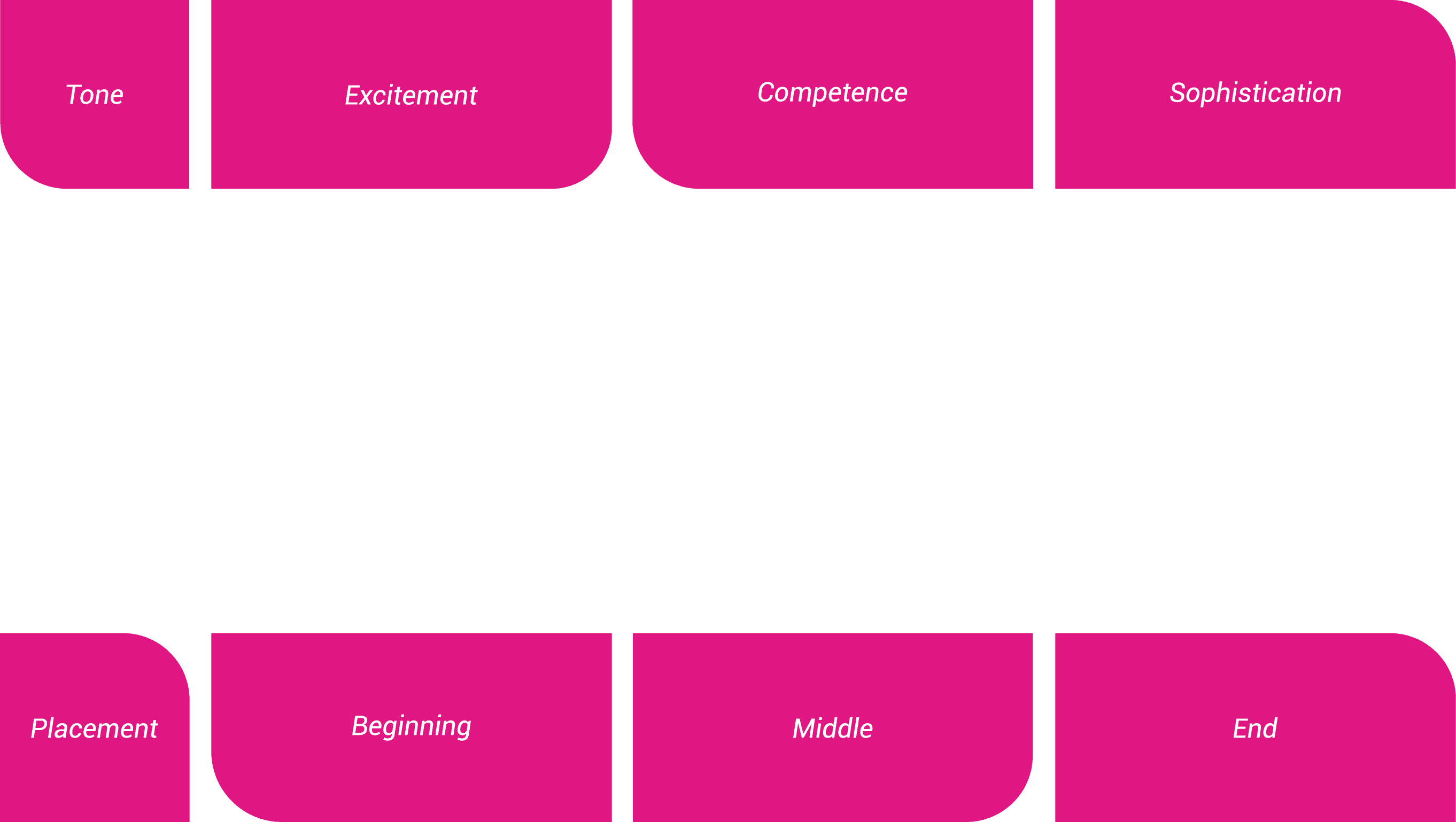
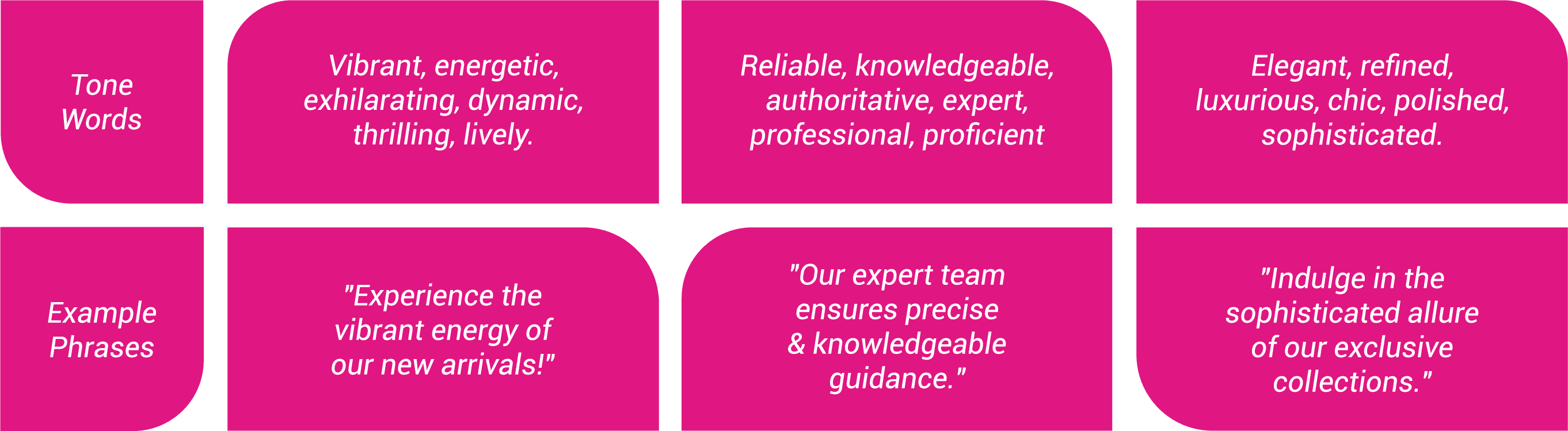
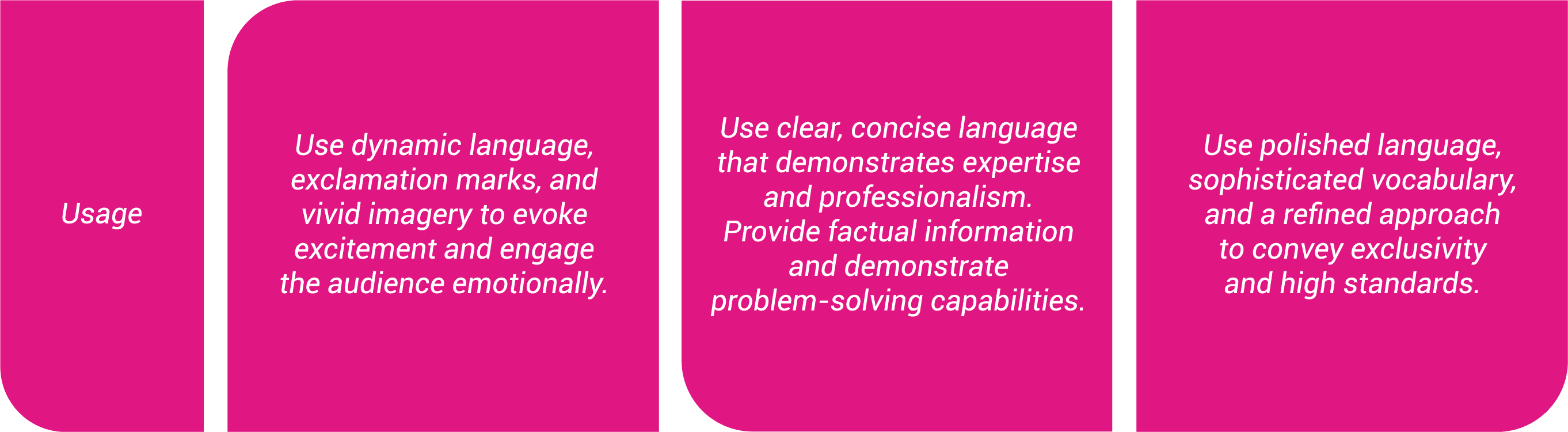
Excitement: Vibrancy, Energy, and Enthusiasm
Sophistication: Elegance, Refinement, and a Sense of luxury
Competence: Expertise, Reliability, and Professionalism
These were not aspirational additions; these were what Stick and Ribbon already was at its best - in the styling sessions, in the community, and in the relationship between the brand and its loyal customers. The identity work that followed was designed to make the same statement the brand was already making in person, but consistently, across every touchpoint.
EXCITEMENT
COMPETENCE
SOPHISTICATION
TONE OF
VOICE

Same product
Same target
market
Different
perception

PERCEPTION
MAP
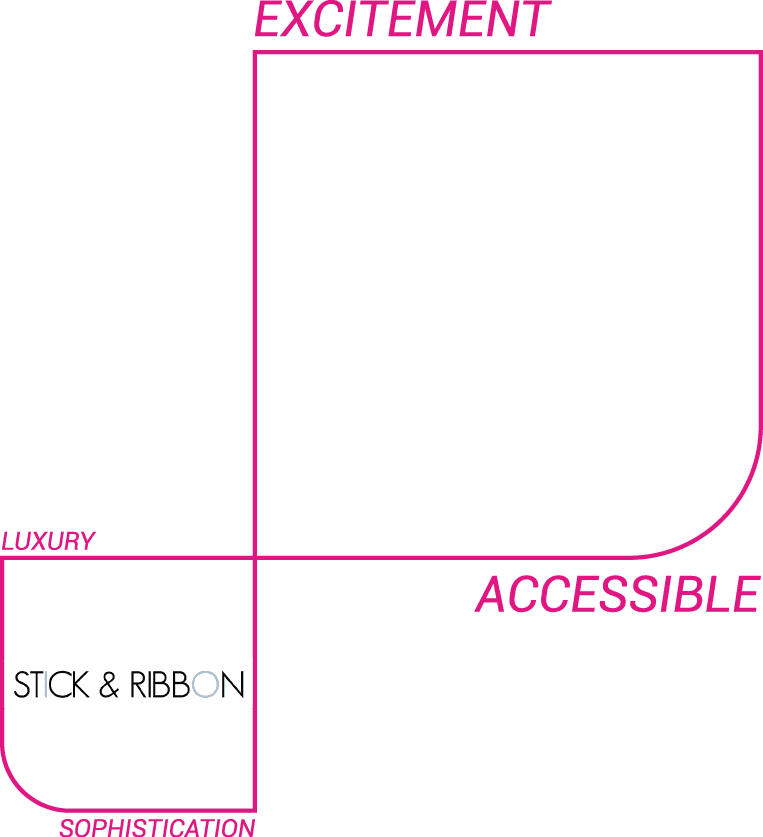
The existing brand sat in the luxury-sophistication quadrant. Expensive-looking. Closed. Not quite what it was.
The target: excitement and accessible. The same brand, read correctly. Bold enough to attract new customers. Approachable enough to keep the community it had already built.
The map made the move visible, not by changing what Stick and Ribbon was, but by changing how it could be seen.


BRAND
LOGO
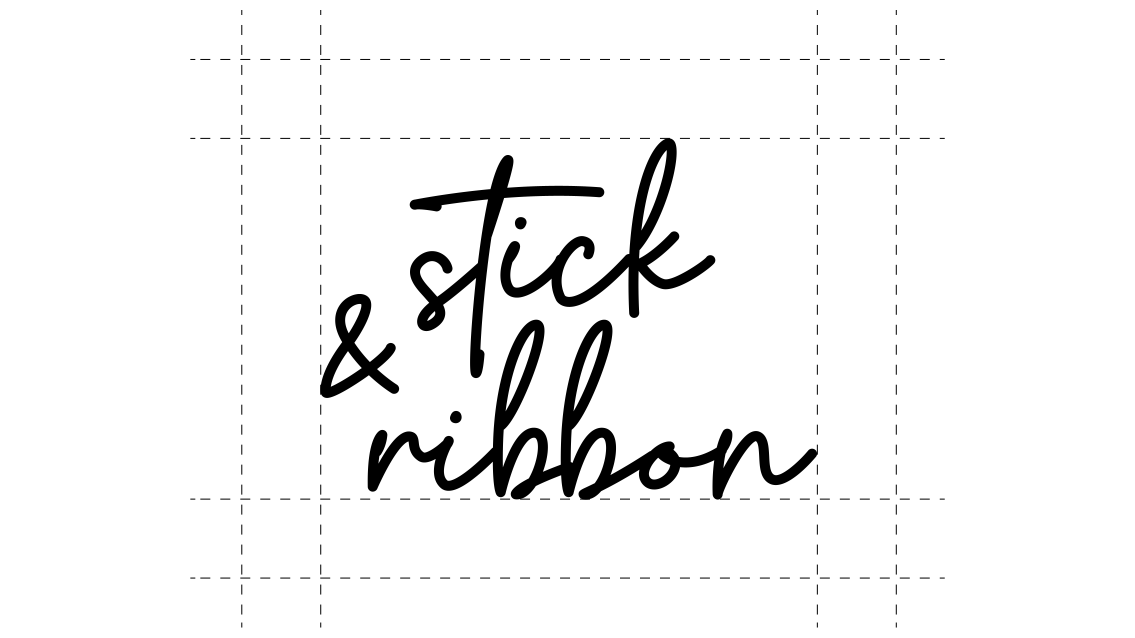
The Stick and Ribbon wordmark is set in a flowing handwritten script. The choice is deliberate. Handwriting is personal, immediate, and never identical twice, the same qualities the brand brings to its styling service. A script wordmark says the brand is run by people, not a chain.
The lowercase setting keeps the mark approachable. There is no capitalised formality, no distance between the brand and the customer. The ampersand sits as the visual pivot of the mark, linking the two halves of the name the way the service links a customer to their style.
The script carries the three brand personality traits in its construction. The energy of the stroke is excitement. The fluency of the joins is competence, a confident hand that does not hesitate. The balance of the letterforms is sophistication. The wordmark is the brand personality made visible in a single gesture.


LOGO
STATES
The wordmark exists in a fixed set of states. Designers select from these states only. No other treatment is permitted.
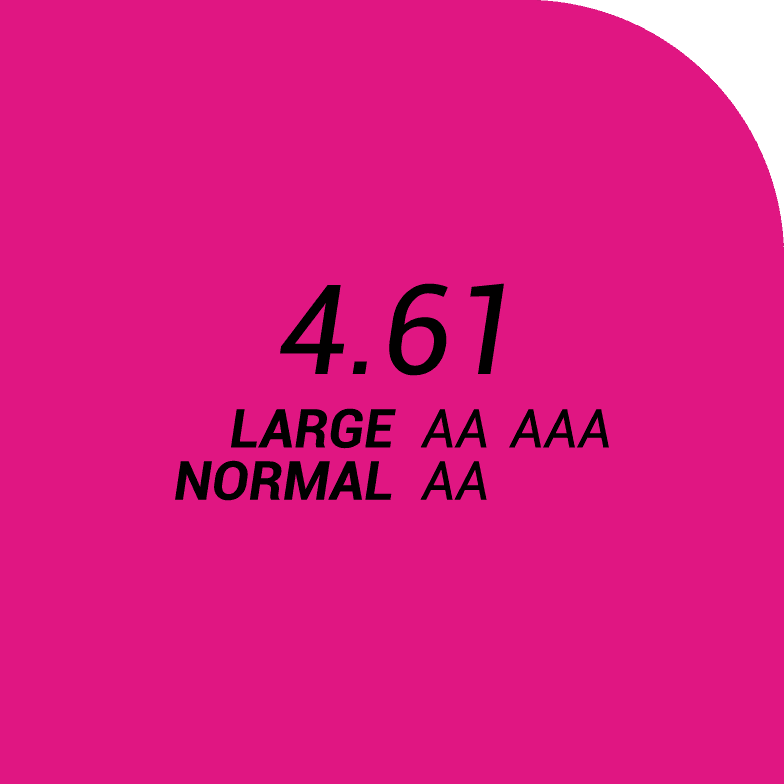
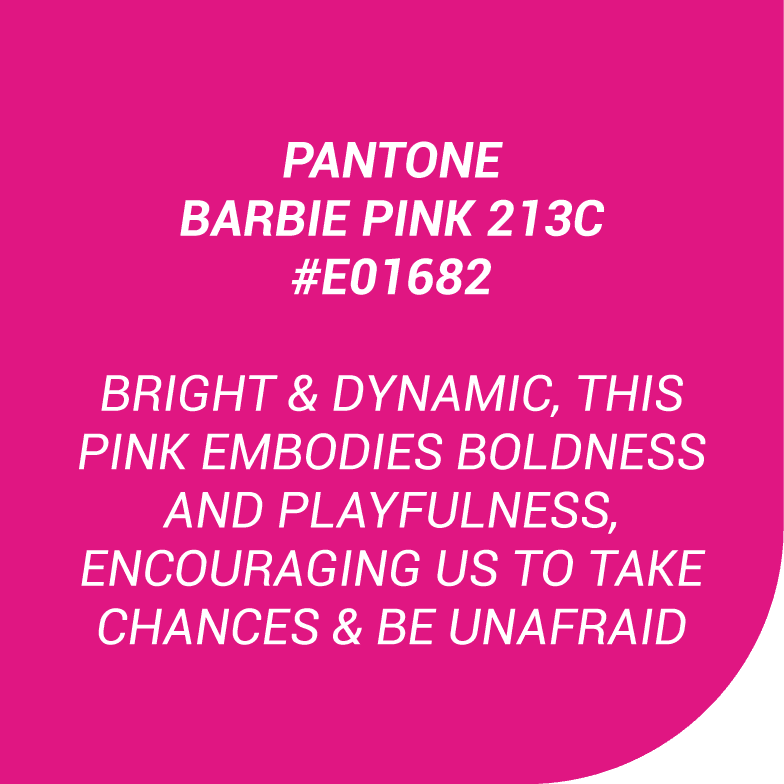
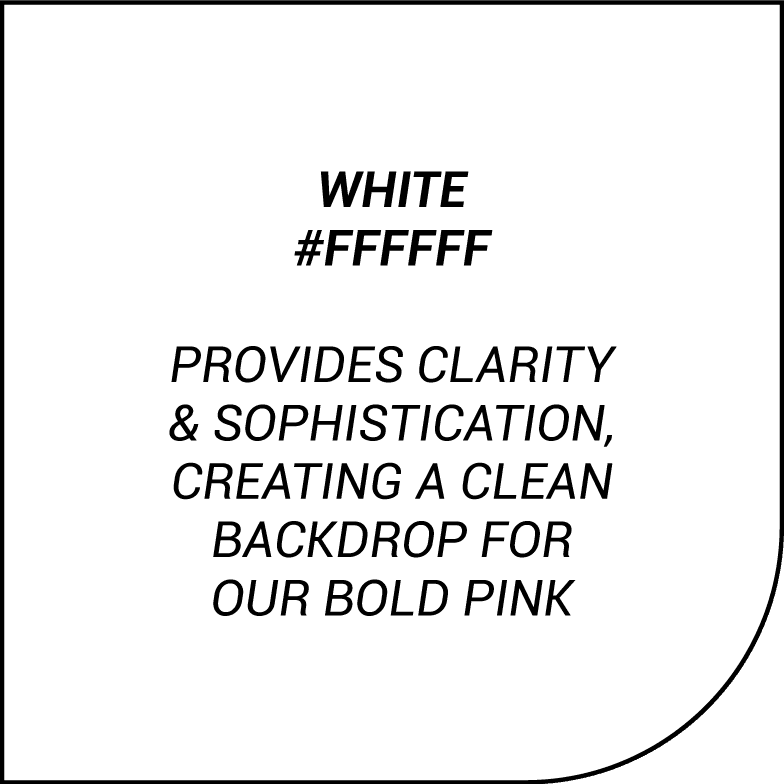
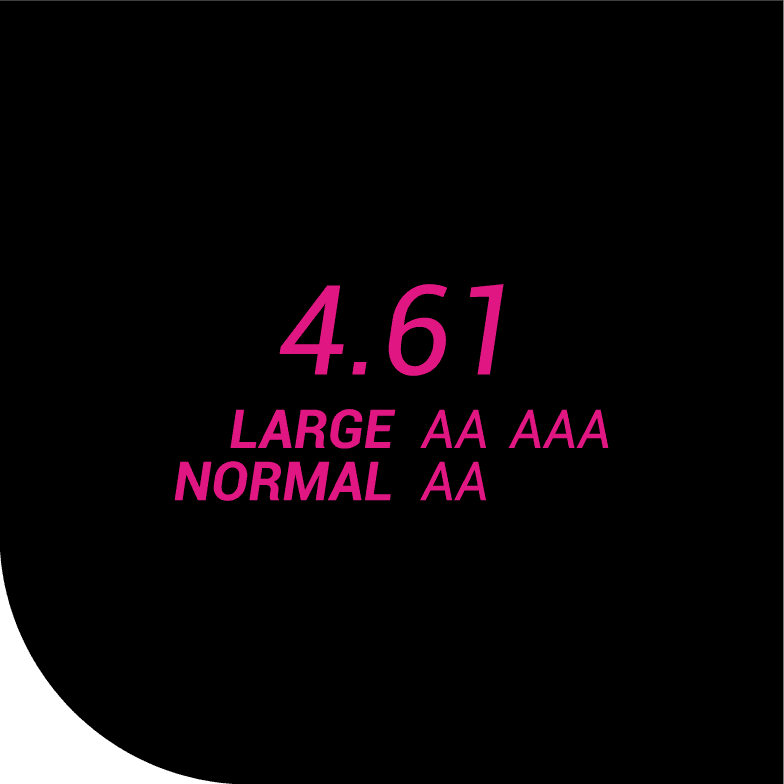
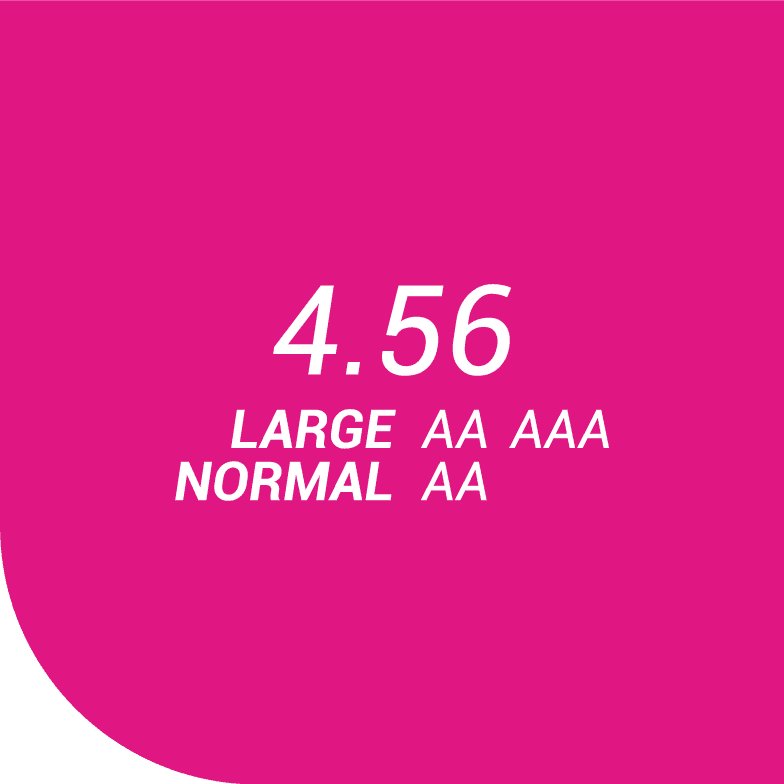
Colour states: The wordmark has two approved colour states. The primary state is brand pink, used wherever the background allows the pink to hold contrast. The reversed state is white, used on brand pink backgrounds, on dark surfaces, and over photography where the pink would not separate cleanly. No colour other than the two approved states may be applied to the mark.
Motion and static states: The wordmark is supplied as both a static mark and a motion mark.
The static wordmark is the primary form for all print and fixed applications: packaging, stationery, signage, and any context that cannot carry motion.
The motion wordmark is the primary form for digital applications: the website, social profiles, video, and any environment that supports animation. In motion, the script draws itself on stroke by stroke in writing order, holds, and resolves. The animation states the brand personality directly, the wordmark being written by hand in front of the viewer.
The static and motion marks are the same wordmark. Motion is an extension of the identity, never a different logo. In any digital context where the motion mark cannot run or has already played, it resolves to the static wordmark in the matching colour state.
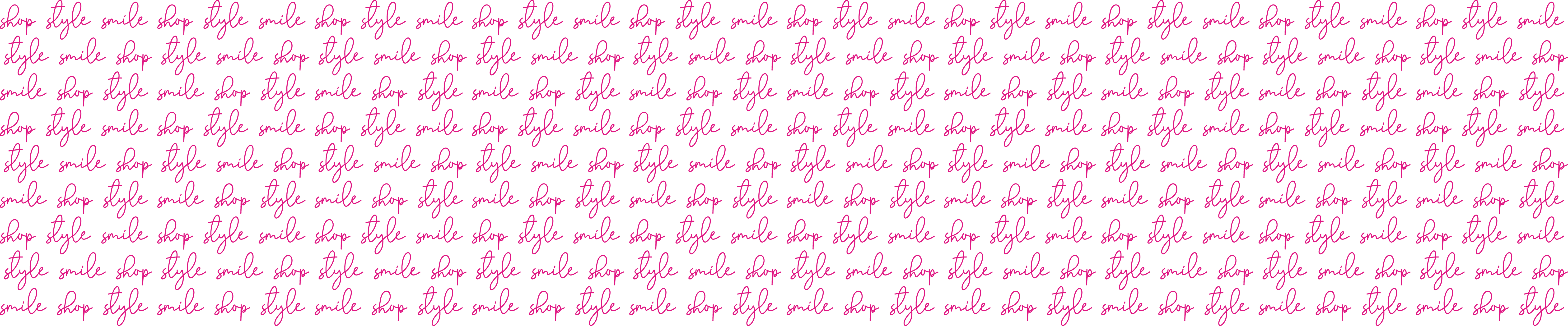
Three words that map to the three pillars of the brand personality and trace what the brand actually does.
Shop carries the excitement and energy of the brand's approach to fashion.
Style anchors its expertise in curated selection and personalised guidance.
Smile signals the warmth and sophistication of the experience itself.
Where the brand name identifies, the slogan clarifies. It tells the customer what Stick and Ribbon offers, in the order they will experience it: the act of shopping, the styling that shapes it, the feeling it leaves behind. It is the brand's purpose in fashion stated in three words.
The slogan is a flexible asset and can be used freely across applications. It works digitally as a background pattern or an animation, and in print across packaging, stationery, and physical touchpoints.
Three rules govern every use. The slogan is always set in the slogan typeface. All three words always appear together; no word is ever used alone. And the words always read in order: shop first, style second, smile last.
The three words may be arranged to suit the format: revealed one after another, set horizontally,
or stacked vertically. The fixed order holds in all of these. The only exception is a repeating pattern or a loop, where there is no beginning or end and the sequence becomes inconsequential.
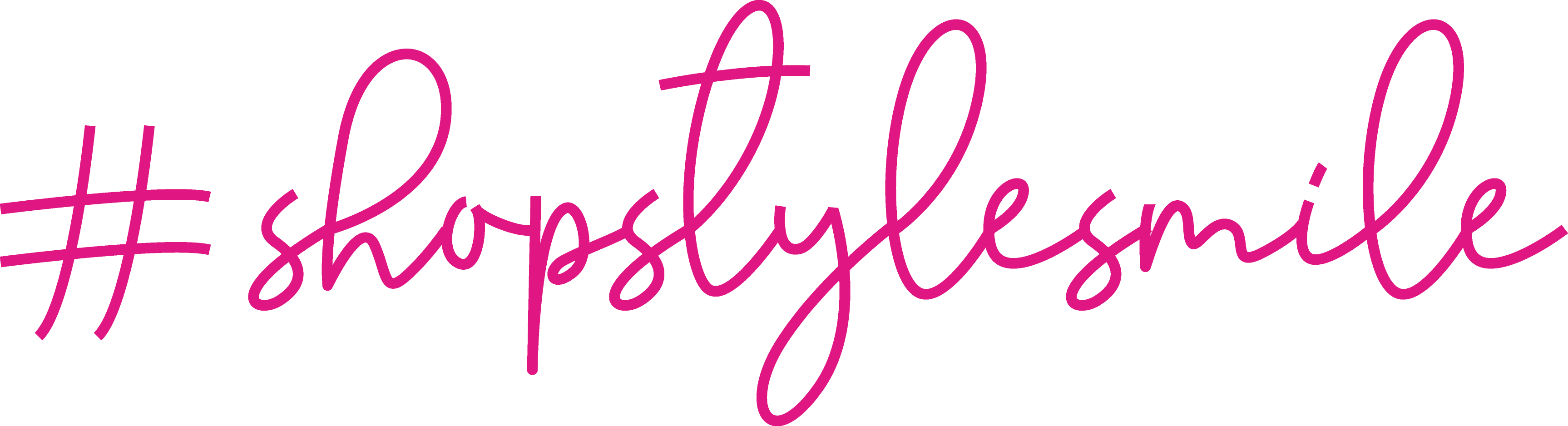
On social media, the slogan also functions as the brand's official hashtag, #shopstylesmile.



BRAND
SLOGAN
Roboto
BRAND
TYPOGRAPHY
abcdefghijklmnopqrstuvwxyz
ABCDEFGHIJKLMNOPQRSTUVWXYZ
1234567890!@#$%^&*()
Roboto
Roboto
Roboto
Roboto
Roboto
Roboto
Roboto
Roboto
Roboto
The brand uses one typeface: Roboto. It is free from Google Fonts and supported natively across every platform the brand publishes on. One universally available typeface removes the need for a secondary font and keeps the identity consistent everywhere.
Italic only.
Roboto is always set in italic. The upright cut is never used. The constant forward lean gives the brand's typography its energy and separates its voice from the default sans-serif of most digital interfaces.
Weight as a graphic device.
Roboto is a variable font with a continuous range from thin to black. The brand treats that range as a design element, not only a hierarchy tool. Titles and body text are built by pairing extreme weights in a single lockup: a heavy, dominant word set against a light, quiet one. The contrast itself becomes the graphic. It carries hierarchy, rhythm, and emphasis without adding any element other than type. This weight pairing is the brand's signature typographic treatment, used consistently across titles and body copy.
BRAND
CONTENT
Stick and Ribbon's content runs in two streams.
The first is brand-created: styling content, outfit features, and announcements for sales, events, and collaborations, produced in-house and carrying a natural, authentic UGC quality. This stream already works. Its energy and authenticity are an asset, and the rebrand leaves it intact. The only recommendation is consistency at the entry point: post and highlight covers should adopt the refreshed identity so the feed reads as one brand at a glance.
The second stream is where the rebrand does its work.
The consequence is a workflow gap. The studio receives a large volume of usable product imagery and cannot publish most of it, because using it as supplied would fracture the brand. So a genuine content asset sits unused.
The fix is a defined treatment that converts any vendor image into a Stick and Ribbon image. Applied consistently, it turns the vendor stream into an extension of the brand's own content, multiplying output without multiplying shoots.
The vendor content gap
As a styling studio, Stick and Ribbon sells clothing from a range of vendors, and those vendors supply their own product photography. Every vendor shoots to its own aesthetic. Pulled together into one feed or one website, the result is visual incoherence: a dozen different brands' imagery, none of it Stick and Ribbon's.
The vendor image treatment
Every vendor image is processed into the brand's visual language through a fixed treatment. The model and outfit are kept; the surrounding aesthetic is replaced with Stick and Ribbon's.
The treatment has three parts. The subject is given a stylised, illustrative finish that lifts it from a plain product shot into the brand's world. The subject is outlined to separate it cleanly from its background. And a stylised illustration is added around the model and outfit, drawing emphasis to the styling itself.
Backgrounds.
The background carries the application. For the website, the subject sits on a white background. White is the e-commerce standard, it keeps the product clear, and it keeps the site usable. For social media, including sales and event announcements, the subject sits on the Stick and Ribbon pink. Where brand recognition matters most, it does the heaviest lifting. The treatment is the same in both cases. Only the background changes with the context.